

ON July 09, 2025 / BY EDITORS GEORGE DAVEY & SHIBRA KHAN / LEAVE A COMMENT
Every year, The Brunel Writer Prize is awarded to the student with the highest graded article submission for the Creative Industries module on Brunel University’s Creative Writing Programme. Kay Drori Borghini was the winner of The Brunel Writer Prize 2025 with her AI and the Future of Storytelling: Partners or Competitors?
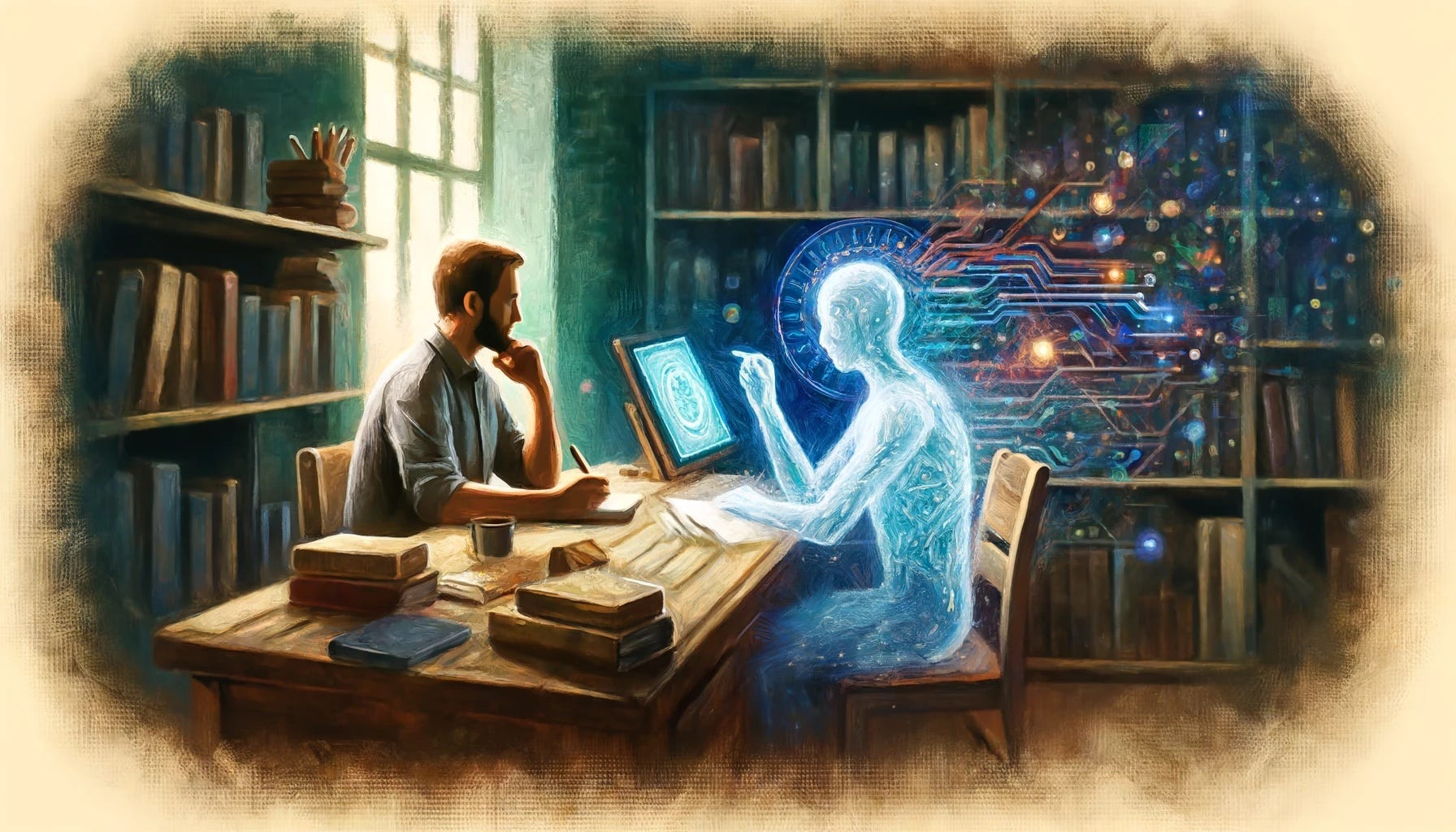
AI and the Future of Storytelling: Partners or Competitors? AI is everywhere these days, infiltrating nearly every corner of the creative industries. From composing original music with tools like AIVA to producing striking digital art through platforms like MidJourney, it’s clear that AI isn’t just dipping its toes into creativity—it’s diving in headfirst. In the publishing industry, it’s helping tidy up messy manuscripts and predict the next big thing readers will obsess over. But when it comes to writing, things get a bit… tense. Storytelling feels personal— deeply, uniquely human. So, what should we think now that AI has joined the party? Is it a creative sidekick to elevate our ideas, or a competitor rewriting the rulebook on how to tell a story?
When the world develops unexpectedly, it’s easy to shut the blinds and cling to what is familiar, point fingers at the disruptor, and imagine the worst. But isn’t that what storytelling thrives on—change, disruption, the unexpected? AI might feel like the villain of this particular narrative, but could it also be an unlikely ally? Sure, it challenges the traditional idea of a lone writer laboring over a masterpiece, but it also opens up doors we never thought to knock on.
When looking at AI as a writer’s collaborator, my first thought was doubt—it felt strange to introduce something so mechanical into something so personal. But over time, I’ve found it can be surprisingly helpful, the possibilities open up in ways that might feel unexpected, but they’re not without merit. AI isn’t here to replace the creative spark—it’s here to enhance it. Writers can use AI to brainstorm ideas when the well runs dry, drawing on suggestions that might lead to something fresh. It can sift through heaps of research, summarize complex topics, and present information in a way that allows writers to focus on the narrative, not the legwork. When it comes to grammar and clarity, AI can catch errors or suggest improvements, giving writers more space to focus on their voice and style. It’s not about doing the work for you, but about removing the roadblocks, so one can put energy into what matters most: crafting the story.
But as we think about how AI can assist writers, there’s one place where its potential is still met with resistance: universities. Universities in the UK seem to have slammed the door shut on AI, declaring it unwelcome in academic spaces. For creative writing students, this reluctance represents a missed opportunity. AI can be a collaborator who inspires fresh ideas and offers practical tools for refining their craft. Shouldn’t institutions built on progress and innovation prepare the next generation of writers for a rapidly evolving world? Trying to hold back the tide of technological change is a losing battle—learning to navigate it takes us much further. The fear that AI will make writers complacent is present, yet universities could teach students how to use its potential effectively and adequately. By equipping creative writing students with the skills to harness these tools, universities wouldn’t just be preparing them to adapt to the future—they’d be empowering them to redefine it. Change is inevitable, but resisting it only leaves us behind. For writers, this is a chance not to replace creativity, but to enhance it.
The future of creative writing isn’t about man versus machine. It’s about extending ourselves over the incoming horizon. Writers have always adapted to new tools—typewriters, word processors, and even the internet revolutionized how we write and share stories. AI is the next step in this evolution, a tool to expand what’s possible. Maybe it will be a man-machine alliance, but it won’t change the core of what makes storytelling so powerful: the uniquely human ability to weave meaning into words. AI isn’t the end of the story—it’s a new chapter waiting to be written.

Kay is an Italian writer who works across poetry and fiction—sometimes strange, often moody—and is interested in voice, atmosphere, and the messy stuff we feel but don’t always say.







 Brunel Writer