The Brunel Writer Prize 2021

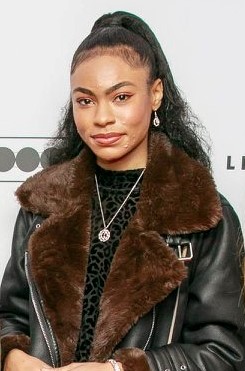
Every year, The Brunel Writer Prize is awarded to the student with the highest graded article submission for the Creative Industries module on Brunel University’s Creative Writing Programme. This year’s winner is Gatlin Perrin whose article offers some insightful tips on navigating uni. Congratulations Gatlin!

From Freshers to Final Year: How to Do University

by Gatlin Perrin

Getting through university is difficult, and anyone who says otherwise is lying. Wherever you’re at with your uni journey, here are fourteen no-nonsense tips and tricks for getting from Freshers to final year with the majority of your limbs intact.

Good luck.

1. There is a room on the second floor of the library filled with study cubicles. This is the perfect place on campus to cry. Don’t ask me how I know this.

2. On the third floor of the library is the mental wellbeing centre, where you can ask for counselling. They also give out free stress balls, which can be used as projectiles if you prefer a more violent approach to problem solving.

3. Some people will tell you that you’ll make friends for life during Freshers Week, and those people deserve to be punched in the face for causing unnecessary stress. That group over there who are all laughing and hugging aren’t “friends for life”, they’re drunk. You will find friends when you find them.

4. If you live in halls, remember – everyone has their own idea of what “sharing” is. The statement “help yourself to anything in my fridge” is a grenade that’s just had the pin removed. Padlock everything. P.S., everyone also has their own idea of what “clean” is, so get ready to discover at least seventeen different species of mould on a dinner plate.

5. Mind your own business. If I’m not judging you for only having attended one lecture the entire year, you don’t judge me for literally crying with relief when a lecturer tells me my assignment wasn’t awful. This is a no judgement zone.

6. When in second year, do not compare yourself to the first years. They’ll always seem more talented, more composed and somehow better looking than your year. Try not to take it personally.

7. When in third year, do not compare yourself to the previous third years. They also had no idea what they were doing, they just hid it better.

8. Buy a dictionary. This is because whatever year you happen to be in, none of the words on the assignment brief will ever start to make sense.

9. Kidneys go for an average of around £5000 on the black market. You can survive with just the one but you’ll need at least six if you keep doing your weekly shop at Sainsbury’s. Lidl is your friend.

10. Third years, buy an umbrella. This is because as soon as you enter your final year you will notice the vast storm cloud of “life after graduation” approaching in the distance. It’s coming faster than you think.

11. In that vein, if anyone asks you what your career plans are for after graduation you are required by law to push them down the stairs. Refer back to tip five.

12. Having mental health issues at university is like contracting an STI: more people have them than you think, you shouldn’t be ashamed but you still need to do something about them before they get worse. Refer back to tip two.

13. Get hopeful. This is because you have to – what’s the alternative? You’re not the only one who didn’t get that internship or won’t get the first they wanted, and this does not mean that you’ve failed at life. Focus on you.

14. Keep focusing on you. The most important part of university is to get out of it alive. Drink water. Get some sleep. Talk to someone when you need help. You’ve got this.


Gatlin Perrin is a North Walian writer who pens books for children and scripts that are not for children. Their play Bear Hands was featured digitally at the Edinburgh Fringe, and their children’s novel His Royal Hopeless is out September 2nd 2021 under the pen name Chloë Perrin. Gatlin likes to think they can do it all, which is probably why they’re in therapy.

Brunel Creative Writing reaches new heights

Creative Writing at Brunel University has risen to 2nd in London in the 2021 Complete University Guide.

Brunel Creative Writing also ranks 13th out of 53 Universities across the whole of the UK, with an impressive 89% overall satisfaction rating from students.

If you’d like to join our growing community of Creative Writers and study on one of our BA, MA, or postgraduate programmes, get in touch with us here.

Book Cover Design Competition: #Horror #Scifi #Fantasy Anthology 2021

Brunel University London’s 2nd year Creative Writing students are preparing to launch their latest anthology.

Myths, Monsters & Mayhem is a collection of flash fiction in the horror, sci-fi and fantasy genres, and will be published in e-book & paperback this autumn. All proceeds will be donated to charity.

The competition for the cover design is open to all Brunel University London Undergraduate students.

If you win, as well as seeing your design on the book & your name credited in the book, we will send you your own e-book copy, and it’s a great addition to your CV.

The design needs to be:

  • High-resolution, 300 dpi .png/.jpg format OR Photoshop .psd format
  • Dimensions: 2,560 (height) x 1,600 (width) pixels
  • Please keep back-up copies of your working files so they can be easily edited!

Entries must be submitted by:
Friday 2nd July, 2021
by 5pm

via email to brunelwriter@gmail.com with the subject header:
‘MYTHS, MONSTERS & MAYHEM’

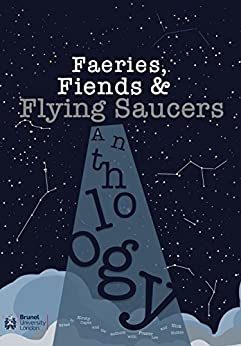
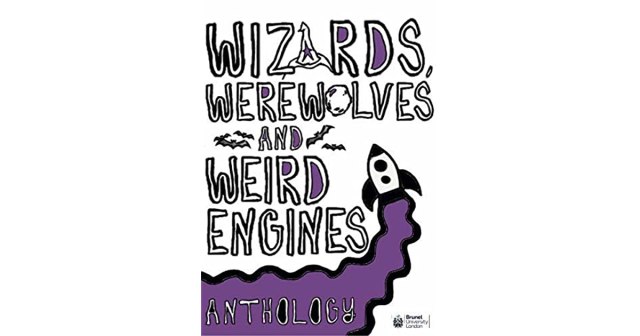
See our previous genre anthology covers for inspiration:

Good luck & happy designing!

The Grim Reaping of Harvey Grieves – from Brunel coursework to a short film

by Alice Lassey

The initial idea for what became The Grim Reaping of Harvey Grieves arrived in 2015. It was the start of my first screenwriting module at Brunel, and I had to come up with an original idea for a ten-page short screenplay. Our tutor, Max Kinnings, had been very fair, giving us a week to produce just a title and logline to share with the class. Being completely unable to think of a dramatic idea I could do justice to in only ten pages, I decided on a comedy about an old man running away from the Grim Reaper. Quirky, right? Original? Fun? I certainly hoped my peers would think so because the only thing rivalling my fear of sharing my work is the eternal need for validation.

Though the insistence on having us share severely unpolished ideas with the class took me some time to recover from, that second year screenwriting module was one of the most enjoyable and – perhaps more importantly – most useful of the course, and for one reason in particular. Far more than any other, this module stressed the importance of developing an idea and editing your story before even starting the first draft, ensuring that major issues are resolved before they become deeply embedded in a full-fledged script. It’s something that has helped me a lot in my writing post-graduation, and something I wish I had kept in mind while writing my major project in third year – but the less said about that, the better.

So, I wrote the script, I wrote an essay about the script (why, Brunel?), I handed it in and… I got a B+. Not bad. I guess it was actually kinda funny. After that, the script just sat in a drawer (well, on a USB, this is the 21st century) for a few years, I graduated, didn’t write a thing for a shamefully looooong time, until…

2018. I’m back home with my parents in the North, I have no job, no social life, and no local production company wants to exploit my unpaid labour in exchange for ‘experience’ (believe me, I tried hard to persuade them). In my attempts to find creative opportunities that may help me scrounge something resembling a career, I sign up to a script surgery being run as part of the Independent Directions (INDIs) festival in Leeds. The only problem is since I have barely written a thing since graduating, I have no new scripts to submit, only that old thing gathering virtual dust in the digital drawer. My assigned reader was writer and actor Gaynor Faye, and her feedback (along with the fresh eyes that come after not looking at something for years) gave me a new perspective on the script and a new desire to work on it.

So I did. And then… back in the drawer. It didn’t come out again until this year when I submitted it for feedback at the recently-formed Northern Screenwriters Table, an online writer’s group that meets bi-weekly to feedback on members’ scripts. The response was very positive, and even before the meeting went ahead, I received an enquiry from one member asking if I had spoken to a director or producer about having it made.

Up until this point, I had always considered production for this script to be a non-starter. All the advice on making short films says to keep it simple, with one location and a limited cast. They don’t say ‘how about a chase across town involving a hospital, a bus, and an ambulance?’ I had no experience in making short films, and this script seemed too complicated, too expensive to make. This changed when Simon came on board because now the project had a producer with experience compiling budgets and who knew how to go about sourcing the necessary funding. Of course, the process of making the film cannot go ahead until that funding is secured, and at this stage, nothing is certain. We have applied (and continue to apply) to a number of industry sources, and are asking individuals to invest in the project through Kickstarter, where we are offering a selection of perks (such as exclusive merchandise and behind-the-scenes access) to backers.

The journey from that class in 2015 to here has been a long one, and with any luck, it will end up longer still, seeing the project through production, post-production, and the festival circuit. Most of it until this point though, has been spent with the script sitting untouched on my computer, so I suppose the moral of the story is (and this is something I am still reluctant to learn myself) – your work goes nowhere if you never show it to anyone. And if you do… perhaps you’ll find someone as passionate about it as you are.

If you’d like to find out more about The Grim Reaping of Harvey Grieves, or perhaps even invest (and getting your hands on some exclusive perks), the Kickstarter page can be found here: https://www.kickstarter.com/projects/simonbg/the-grim-reaping-of-harvey-grieves

Tomorrow’s launch of the Kickstarter campaign will be accompanied by a livestreamed launch event on YouTube (https://www.youtube.com/watch?v=U7klydtYaQI&feature=youtu.be&fbclid=IwAR3zBWr8HX0t3Nki28KjYaAHD9JmvrltavwM3sdlOo1vYPlOY_Wg9AYB4xk) and Facebook Live.

You can follow the project on social media (Facebook, Twitter, Instagram) at @harveygrieves.

Alice Lassey graduated in 2017 with a first-class honours degree in Theatre and Creative Writing. An aspiring filmmaker, she currently writes on film at her blog Extended Cut (www.extendedcut.co.uk) alongside developing script and prose fiction projects. She can be found on Twitter and Instagram at @alicelassey.

The Brunel Writer Prize 2020

Every year, The Brunel Writer Prize is awarded to the student whose article submission for the Creative Industries module on Brunel University’s Creative Writing Programme is the highest graded. This year’s winner is Perri Wickham. Perri’s article shows how she used the various skills acquired through the Creative Writing course in an exciting industry environment.


HOW MY SHORT FILM ‘LONDON MADE ME’ FEATURED ALONGSIDE RAPMAN’S ‘BLUE STORY’ SCREENING

by Perri Wickham

During an unproductive day of tapping through Instagram stories, I came across the LDN Filmmakers application.  The week-long course was organised by the Mayor of London and Digital Cinema Media to help applicants write, direct, and produce a short film.  I immediately swiped up, excited to put my screenwriting skills to use outside of my Creative Writing degree, to finally get behind the cameras, and to connect with aspiring filmmakers.

The application process was straightforward.  I had to write down my personal information and in 250 words, explain why I wanted to participate.  I felt this was a fantastic opportunity for me to get equipped with new skills as I had never made a film before, and to put my vivid imagination into action.  A week later, I received a notification to say that I was successful.

Industry members from Chocolate Films Production led the training at Genesis Cinema.  During the introductory session, they gave us a brief to base our plot on London.  They told us that each of our films would feature alongside the screening of Rapman’s new movie ‘Blue Story’ at Genesis, which turned the pressure up a notch.  ‘Blue Story’ is an adaptation of Rapman’s 2014 YouTube series of the same name that explores gang rivalries in London. 

I teamed up with six participants, and we were allocated a mentor for support.  We brainstormed ideas about what London meant to us, and how we could capture our message cinematically through the plot as well as visuals.

Initially, there was a miscommunication on our first idea, as everyone had slightly different visions, which was confusing.  Thanks to our mentor, we managed to narrow it down enough to pitch to the other groups and their mentors.  Receiving feedback was essential as it helped us to clarify our concept and make it appropriate for younger viewers, as our film was going to be screened in schools. 

My group and I decided to tell the story of a protagonist, who on her way home, reflects on London’s vibrant culture and how it shaped her into a successful adult, using flashbacks of her past.  It only made sense to add an inspirational spoken word poem to talk the audience through her journey.  Since I am a poet, I volunteered to write and perform the voice over.

After receiving training on how to use film equipment, we solidified our storyboard, then set out to film in Stepney Greene.  The first day turned out to be experimental, and we decided to extend our filming location to Stratford as it had more landmarks that would benefit the visuals.  We spent the next two days knuckling-down, ensuring that we had enough footage to make a high-quality final draft. 

The final day of the course was crucial, as we had to complete a rough draft of our edits and create a shot list for Chocolate Films, who would polish it.  We had a guest visit from Amani Simpson, the creator of his autobiographical short film ‘Amani’, and one of the main actors, Ellis Witter.  It was inspiring to see a director who had no experience, establish connections, and gain enough funding to compose a successful short film with over one million views.

On the 24th November, I attended my first red carpet premiere in Hollywood.  Okay, it was at the Genesis Cinema.  Watching my first short film on the big screen was a powerful experience, as I was able to witness how a project, I made in under a week could transform into a dynamic yet professional piece. 

LDN Filmmakers taught me that if you strongly believe in your vision, it is possible to execute it with the right equipment, no matter the time constraints.  Now that I’ve gained confidence as a filmmaker, I am determined to make my mark in the film industry, and that starts now.

You can find Perri’s short film “London Made Me” on LDN Filmakers.

Perri Wickham is a flourishing Creative Writing Graduate looking to make her mark in the Entertainment Industry.  Hailing from Southeast London, where the trains run slower, Perri currently freelances as a blogger for Fledglink, a journalist/comms assistant for Brits + Pieces, and writes poems as well as scripts in her spare time.  If she goes MIA it means she’s working on a special project.  Her material is very audacious!

We Wrote a Book During a Pandemic

by Chloe Perrin

In May 2020, Britain went indoors and stayed there. Out of this sudden extreme burrowing came a flood of tweets and Insta posts documenting the myriad of activities the country was using to keep itself occupied while the world outside shut down.

Some people learned to knit. Others took up yoga.

We, the Horror, Sci Fi and Fantasy module class of 2020, wrote a book.

(Look! our book is the #1 hot new release on Amazon!)

Robots, Rogues and Revenants is an example of what happens when a group of writers are told to use their imaginations during possibly the most anxiety inducing period of their lives. And when you read the anthology of short stories for yourself, you’ll get to experience first-hand the kind of book a global catastrophe makes.

While it’s nice to have something soft and comforting during a time of such ridiculous uncertainty, some of us decided instead to really lean into the catharsis of creating something even scarier than the situation we were already in. I’m not exaggerating when I say this book contains a deliciously wide variety of nightmares, from the relentless pestering cries of the undead to the best canned meat you’ll find this side of London.

And I’m warning you now. There is gore. Lots and lots of gore.

You won’t be safe from it in the non-horror genres either – even our high fantasy authors decided to splatter a sizeable amount of blood on their pages, mixing magic with deaths so bloody they would make George R.R. Martin squirm.

But don’t worry about it too much. If gut squeezing, bone snapping horror isn’t quite what you’re into at the moment, we can respect that. When locked inside for months on end escapism is the name of the game, which is why entire pantheons of gods live in this book. Feeling terrified by the present day? Go back centuries to a time where deities and fairies mixed with mortals. Or maybe you’re simply missing the present we had only a few months ago, and just one more party will do – no problem. The amazingly cosplay-able rave witches of London have got your back.

And there’s the future, of course, where you’ll be provided with a service that allows you ownership of a late loved one’s memories – and in that vein I should really warn you that one or two stories will definitely have you wiping away a tear. Sadness is a catharsis too, and who doesn’t need a good cry while the outside world upends itself?

There is something wonderfully unique about Robots, Rogues and Revenants, not just in what it is but when. This book is a time capsule of a group’s imaginations during a global pandemic. Real life will always influence the stories we produce, making each story in this anthology probably the strangest insight into the strangest time a lot of us have ever or will ever live through.

Which is exactly why you should pick it up right now and read it.

(All proceeds to NHS combined charities)

Chloe Perrin is a North Walian writer living in West London. Her writing has been featured in previous anthologies such as Hillingdon Literary Festival’s We Are Here and Brunel University’s Letters to my Younger Self, and her one act play The Ghost We Live With was produced by Studio Brunel in 2019. She hopes to continue creating funny, strange, and oddly depressing pieces until someone finally stops her.

Book cover design contest: #Horror #Scifi #Fantasy anthology

Brunel University London’s 2nd year undergrad Creative Writing students are preparing to launch their latest anthology of short flash fiction.

Robots, Rogues & Revenants is a collection of flash fiction in the horror, sci-fi and fantasy genres, and will be published in e-book format later this year.

The competition for the cover design is open to all Brunel University London Undergraduate students. If you win, as well as seeing your design on the book & your name credited in the book, we will send you your own e-book copy, and it’s a great addition to your CV.

The design needs to be:

  • High-resolution, 300 dpi .png/.jpg format OR Photoshop .psd format
  • Dimensions: 2,560 (height) x 1,600 (width) pixels
  • Please keep back-up copies of your working files so they can be easily edited.

Entries must be submitted by:
Monday 13th July 2020
by 5pm

to Mr Frazer Lee via email (frazer.lee@brunel.ac.uk) with the subject header:
‘ROBOTS, ROGUES & REVENANTS’

See the previous genre anthology covers for inspiration:

Good luck & happy designing!

Brunel Creative Writing MA Students Write, Record and Mix an Album in a Week

Screen Shot 2020-03-29 at 18.44.29

By Alex and Simone Ayling-Moores

The coronavirus pandemic has affected everyone. Whether it’s our collective isolation and restrictions leaving home comforts, or those fears and concerns for both loved ones, and those we’ll never meet: it is a uniquely uncertain time for almost all of us around the globe.

As both musicians and music teachers (and aspiring writers too!) we had the prospect of losing  a big chunk of our income so, instead of twiddling our thumbs, we decided to try and make something positive from all of this.

Thus the challenge to write, record and mix an album, all in one week, was something we set ourselves… and WE DID IT! Pushing through early mornings and very late evenings, the compositions were crafted and recorded with passion (and a lot of persistence!).

It wasn’t easy. But that’s not to say that it wasn’t fun too!

The album, entitled ‘Escapism’, was started on Monday (March 23rd) and was released Sunday (March 29th). It’s an eclectic album, which presents listeners with a smorgasbord of musicality. From dark harmonies, and electronic distortions, to offbeat lyrics and exotic rhythms, the album blends styles and genres to surprise, entertain and delight.

Like its title suggests, we want it to be a space you can escape into for forty minutes or so, and catch a little novelty and intrigue in moments of dismay and doubt.

‘Escapism’ is available for download through the link below for merely a fiver.

Any download or share really is massively appreciated – if we can make up even an hour’s worth of lost earning from this, it will all have been worth it!

https://alexandsim.bandcamp.com

Screen Shot 2020-03-29 at 20.03.52

The Brunel Writer Prize 2019

The Brunel Writer Prize is awarded to the student(s) who achieves the highest graded 600 word article submission for the Creative Industries module on Brunel University’s Creative Writing programme. This year’s prize is shared between two students: Renée Dacres and Russell Christie. Renée’s article discusses diversity in the publishing industry and a new publishing venture that aims to address diverse representation in children’s books. Russell’s article focuses on autobiographical writing and in particular, perceptions related to working class fiction and autobiography.

Congratulations to Renée and Russell.


THE KNIGHTS OF CONUNDRUM:

Is the publishing industry really changing?

by Renée Dacres

Knights-Of-logo-01-787x175So, you want to be able to sniff a freshly printed book hot off the press? Maybe even a book you’ve had a hand in publishing?

As Creative Writing students, it’s often assumed that many of us have a love of books (but don’t worry, I won’t tell Will Self if you don’t). To that end, it’s also assumed that many of us want to get involved with the publishing industry.

As a Brunelian, you are part of a very diverse community and some of us may be guilty of taking that for granted at times. University is enough of a bubble in its own right, without taking into consideration what and who comprise our environment.

The Equality Act 2010 prompted the start of Brunel’s Student Success Project following their five-year plan for 2015-2020. The scheme looks specifically at why there are gaps in the attainment of 2:1 and first class degrees for BAME students. Whether there is actionable proof of improvements is unknown because of the lack of available data.

The progress of racial diversity within the publishing industry is also questionable. There is certainly a push to encourage more BAME candidates to apply for entry roles, what with initiatives like Hachette’s Fresh Chapters eight-week internship programme or HarperCollins’ BAME Traineeship . If you ask me, it seems likes these schemes amount to noise and not much else. After all, research by The Publishers’ Association from 2018 shows that the percentage of BAME respondents to the Diversity and Inclusion survey fell from 13% to 11.6% compared to 2017. The 1.4% fall suggests that these schemes aren’t doing enough to encourage BAME candidates to apply for roles.

Let’s compare these figures to those of us studying at Brunel.

In 2014, there were 14335 students at Brunel. Of those students studying at Brunel who are UK-domicile (i.e. home students) almost 38.8% of the total student population was classified as BAME, not accounting for those who did not wish to disclose their ethnicity. That is around 5590 students. If the publishing industry was to use the student body at Brunel, they would have to increase the number of BAME employees by 27.2%.

That’s over a quarter of the entire workforce!

However, with the birth of Knights Of, it seems that there is actionable proof that the publishing industry is trying to change. Knights Of is a publishing house dedicated to increasing diverse representation in children’s books.

Their shake-up of the submission process is also worth logging in your writer brain. Authors are free to pitch their novel ideas through a “Live Chat” function with one of the team and if they like your idea enough, they’ll ask you to send over a synopsis. This seems a lot less scary than submitting to an agent or publisher the way we normally would, don’t you think? I think this level of approachability is very important; not only when it comes to encouraging BAME authors to submit their novels, but also when it comes to making job applications. The publishing industry is notoriously aloof, so it seems that a shift in tone is necessary if the PA truly wish to achieve their goals of improving ethnic diversity.

The Publishers’ Association suggests that 15% of employees should be Black, Asian and minority ethnic. This is despite the fact that the 2011 census data suggests that 24% of the population in England and Wales would be considered BAME.

Alternatively, the publishing industry should be aiming for a workforce which is representative of the country’s demographics. Hence, they should aim for closer to Brunel’s representative 38.8% BAME demographic. After all, even if that target is not met, it’s still a significant improvement on current conditions.

Maybe if more of us felt like we were represented by the books being published and the people who publish them, we wouldn’t be so worried about offending Professor Self? Because we’d all love books.

IMG_7016 2

Renée Dacres is a writer of stories, screenplays and personal essays hailing from the grey area that is the Essex/ London fringe. Which one is it? Nobody knows. She has hopes of writing a novel in the future, with interests in both publishing and television development. If you have penchant for ramblings, you can find plenty on her blog.


FACTION FICTIONS

by Russell Christie

DcHk_K_W0AE-9UD

Unfortunately, the Spread-the-Word, life-writing competition email didn’t tell me why my submission had not made the longlist for this year’s prize, just that it hadn’t. Leaving me to my own speculations as to why my story had not made the cut. Was my life-writing too fictionalised for their category? Memoir may be the new novel, but is novel the new memoir? What is the relationship between autobiography and fiction and how does the autobiographical fiction I had submitted differ from what is categorised as life-writing? And: is memoir what it used to be?

An event at Brunel – an examination of autobiografiction in light of The Burnett Archive of working class autobiographies – offered to further stoke my grief-fuelled speculations, or ameliorate them with free wine!

Working class investment in writing autobiographically based fictions has historically been modulated by conscious political positioning of the texts by the genre’s major exponents, apparently. Autobiography fictionalized enables distance and circumspection in using the material of a life. It is a different mode of exposition from the promised authentic intimacies of memoir: it takes place in a fiction form. Significant scenes are often transposed onto other incarnations and protagonists in a distancing that mediates against easy nostalgia. Stripped of the requirement for a psychological accounting of self, this fictionalising ‘shows’ the basic facts. The distinction between fiction and memory in this context is one of genre markers based on style and perspective rather than documentary truth. Fiction is showing, memoir is telling, life-writing is telling by showing.

I reflected that the frequent designation of working class fiction as inherently autobiographical, characterizes working class people as inescapably marked by their situation in a way that middle class writers supposedly transcend. Working class fiction gets categorised as autobiographical because it is suffused with a coal dust which does not appear in the milieu of a middle class oblivious to its own saturated marking with clean crockery and Evelyn Waugh conversations. The middle class, of course, are equally marked by the biographical limitations of the bourgeois imagination. Aren’t they, Alan Hollinghurst?

Denying autobiographical pertinence to your writing – even to speculative fiction – is to pretend that the imagination is undetermined and un-situated: a standard bourgeois conceit and ideological ploy. Fiction no more exists than freedom. Everything I write displays my historic circumstances. I cannot help but express the autobiographical configurations of my life, channelling the people who have influenced me, the travel I have been privileged to, the language that gives birth to this tongue and no other. How would I write outside of this? There is no universal writing, or even any universal to know, apart from this binding we are all subject to: this thrown-ness into our own narrow and total worlds, which we then only transcend through sharing as a limitation, as a specific embodiment, as ourselves.

And where is the proof that would differentiate fact from fiction? Even if you video your whole life, what would you be evidencing in the editing: psychological structure, political reality, one story among others? It’s a naïve understanding of truth that easily marks fiction from documentary. As in the contemporary shift from nostalgically reflective, purple prosaic memoir to the stripped back, New Journalist, first person prose of life-writing, it is the form that distinguishes genres rather than the events these forms are built around.

It is the tenor, the intimacy, the pose, the hands-up, the hidden-ness, the sentences, the perspective that distinguishes fiction from life-writing and memoir. These are genre markers. Fiction has a fiction form, irrespective of its factuality. Self assertion, ownership and marketing is part of the form of contemporary autobiografiction. And what you remember, told as fiction, is not memoir. Except perhaps for Thomas Wolfe’s Of Time And The River and, ahem, my submission to the life-writing prize. Is there more wine?

edf

Russell Christie is a novelist and procrastinator who’s lived in several countries, often undercover and in various states of legitimacy. He enjoys throwing in curve balls from left field, especially dialectical materialism (still!) and Buddhist ontology. He came to Brunel (like everywhere) to escape the forces of the state but ended up quite liking it (like everywhere). His first novel, The Queer Diary of Mordred Vienna was published in 2015.