Carpe Diem, Middle-Aged Mode Activated

ON July 14, 2026 / BY EDITOR SOPHIE NAMBUFU / LEAVE A COMMENT

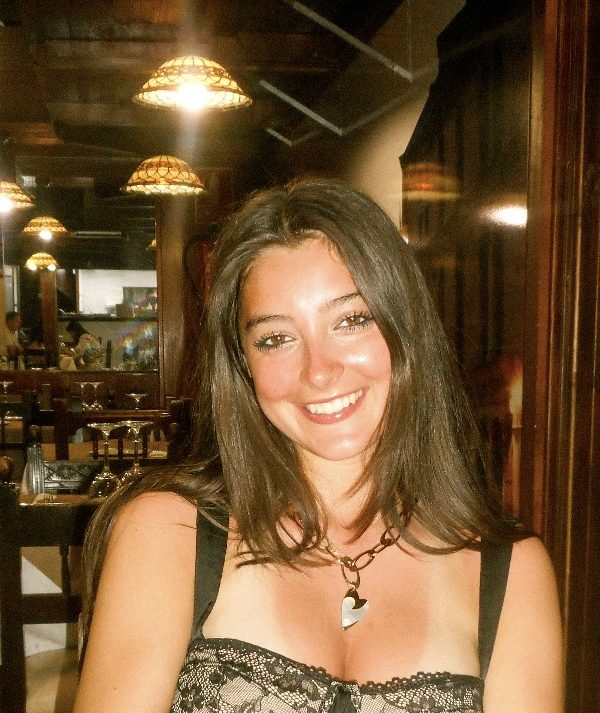
Every year, The Brunel Writer Prize is awarded to the student with the highest graded article submission for the Creative Careers module on Brunel University’s Creative Writing Programme. Congratulations to this year’s Brunel Writer Prize winner, Tamsyn Down, for her article ‘Carpe Diem, Middle-Aged Mode Activated’. 

Be warned: one minute you’re burning the candle at both ends, the next, you find yourself admiring a colleague’s cardigan pockets and discussing air fryer recipes. If this resonates with you, stop—take drastic action before the double-zipped slippers lure you in. Find something that makes you uncomfortable (not Nigel Farage), then dive out of your comfort zone, because that’s exactly where your magic is hiding.  

Embarking on a Creative Writing degree, as I approach fifty, has been a revelation. I regularly resist the urge to skip back to my car after an enlightening lecture or when savouring the mental uplift as creative minds merge in a workshop. Although it was autumn when I began my Brunel journey, an awakening has jump-charged my life. I transformed into a person whose hand flies up and down to answer questions in seminars, gladly immersing myself in set texts, long into the small hours at home. Shedding my self-consciousness is not so much about discovering new confidence, but a surety of knowing how quickly life passes by, and there’s no time to waste—carpe diem, middle-aged mode activated. 

Grasping this gamble firmly, I’ve set about making the most of every opportunity university life offers, apart from clubbing at ‘The Venue’ (my days of waking up with a furry mouth hugging a kebab are over). If there’s an additional online webinar, a chance to work with the subject librarian, open mic nights or a competition for emerging writers and poets, count me in. To date, this somewhat maniacal, yes, approach has led to my poem being published in an anthology celebrating Benjamin Zephaniah (our late, great, much-missed legendary professor), an invitation to perform this at two university events, a free trip to Belgium representing Brunel, and the writing and directing of a short film as well as risking my sanity for stand-up comedy. Finding myself in front of a packed theatre, eager for entertainment, has been my most elaborate form of self-harm to date. Yet, somehow, despite my stomach churning in resistance, I found myself delivering quirky anecdotes, rising on the swell of laughter beyond the bright stage lights. 
​​

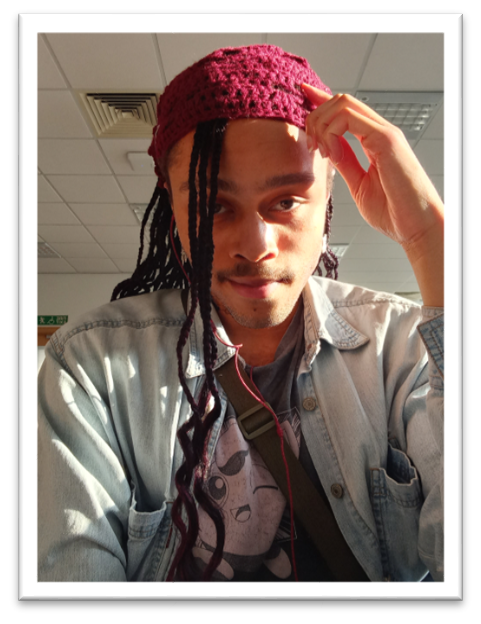
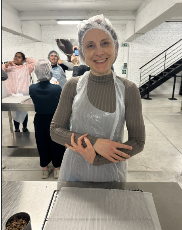
Eurostar-ready, no mad concourse dashing, honestly. Photo by Arisa 

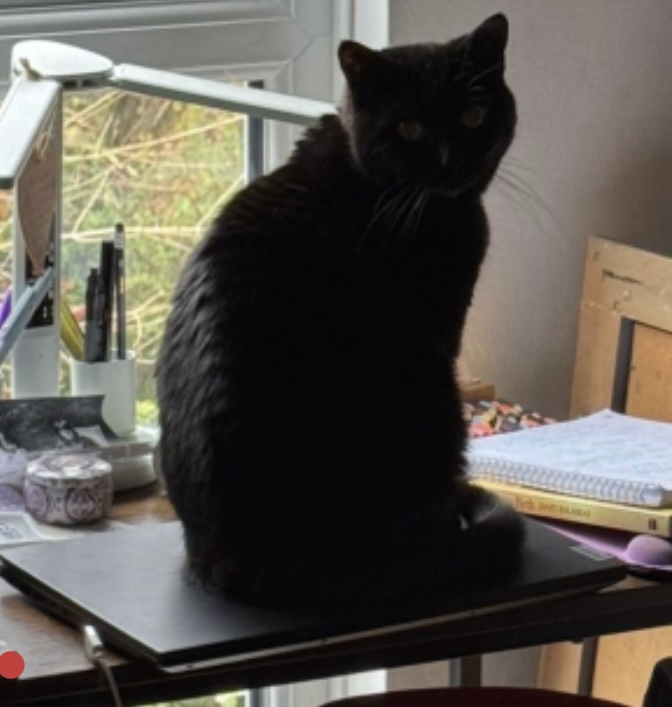
None of these experiences would be possible without the gentle patience and acceptance I’ve found within Brunel’s Creative Writing community, both students and teachers alike. Without the former, I might’ve self-combusted, reduced to smouldering, scorched slippers, presented with seemingly incomprehensible tasks like retrieving essay chunks, inadvertently deleted when my cat pounced on my laptop, losing my car in the car park, or working out the witchcraft of Wiseflow. No question is too big or too small—I’m never too much, even when my anxiety litters my logical brain. During a recent meeting with my form tutor, my fears surrounding my special project completion wobbled wildly through my voice. Calmly, I was reminded: “Tamsyn, it’s week one.”
Conducting dual lives can be jarring, but becoming a mature student is a game-changer, which I’d highly recommend—unlock your secret second life. Regenerating from an NHS administrator to a student, unglamorously Doctor Who-style in the car, is entirely worth it, even if I’ve developed a risky relationship with caffeine, careening around the M25 at odd times. Creating a world of opportunity with words has led to unimaginable possibilities far exceeding air fryer recipes (although secretly I champion both). Days quickly melt into decades, making time an invaluable commodity. Why sit with a what if, when you can turn what might be into a life driven by your dreams? Free your hands from your cardigan pockets, then sign up for that course! 

Tamsyn Down is a creative writing graduate, a passionate advocate for mental health awareness, and an aspiring writer, film director and poet. Previously published work includes satirical articles in the Chatty Chimp, under her pseudonym Lady Tamsyn Marie and the poem ‘Sometimes’ in Borderless. Her writing explores contemporary social issues through a variety of media, including fiction, life writing, poetry and screenwriting. Tainted Love, a ten-minute short film written as part of her coursework, was made in collaboration with Studio Brunel, with Tamsyn making a directing debut. Tamsyn is a proud Mum to three adult children and two black cats. She is an avid reader, enjoys staying fit and volunteering as part of the core team at her local Parkrun. 

Being a Female DJ

Or: Please Remove Your Hands From My EQs    

ON JULY 14, 2026 / BY EDITOR SOPHIE NAMBUFU / LEAVE A COMMENT

Every year, The Brunel Writer Prize is awarded to the student with the highest graded article submission for the Creative Careers module on Brunel University’s Creative Writing programme. Darcy Butler was a runner-up for The Brunel Writer Prize 2026, discussing her experience as a female DJ in her article, ‘Being a Female DJ’.    

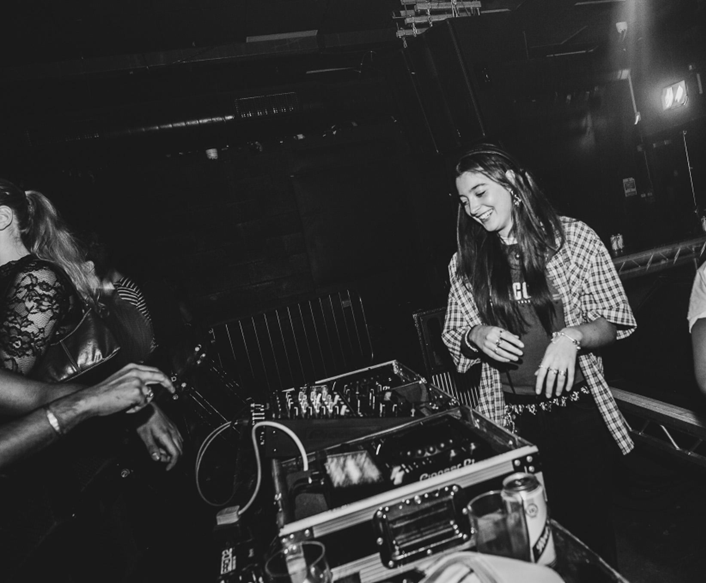
Me, in action and smiling at The Bullingdon, Oxford.    
       Credit: Simon Davenport    

When people find out I’m a DJ, there’s always a pause. A gentle buffering symbol appears above their heads. Then come the questions. “What do you play?” Fair. “Do you sing?” Less fair.        

“So… Who taught you?” Sir, I have Google and hubris like literally everyone else.    

Before I’ve even plugged in my USB, the silent audition begins. Not of my music, but of my right to exist near expensive buttons. I must prove that I do understand what an EQ is and that I’m not here to gently stroke the mixer like a nervous horse. Men are rarely quizzed. Women are assessed like faulty appliances. 

Almost immediately, a Booth Guy appears. He leans in way too close, breath seasoned with lager. He points at the mixer. “You know you can bring the mids down a bit?” Yes. I do, actually.

I deliberately haven’t because it sounds better. This confuses him. He touches a fader anyway. I die inside. Somewhere, a kick drum is weeping. 

I once dated another DJ. Because of course I did. Silly me. You’d think that it would be collaborative. Instead, it became competitive in a way I never agreed to. “You only get gigs because you’re a girl,” he said, whilst asking to borrow my USB and my emotional resilience. Hear me now: romance isn’t truly dead, it’s just booked at 1am on a Saturday and insists on controlling my set.    

Promoters are a mixed bag. Some are brilliant. Others behave like booking you includes some kind of backstage DLC. Hands appear on backs, waists, shoulders. None of these hands are attached to people who know what a gain knob does. In retaliation I usually adjust the low ends – red-lining the mixer. FYI: this is naughty, it can destroy the mixer. Passive aggression is best delivered at 128 BPM. 

The messages I get deserve their own genre. One man repeatedly asked me to play at his event. Complimentary. Supportive. Until the sentence: “Come warm up with me in my studio ;). It locks from the inside.” This was pitched as a perk. Like good acoustics. I imagined being sealed into a room of tangled cables whilst he explained that “real DJs don’t use sync” and asked if I’d heard of vinyl, like it was folklore. Then there’s the late-night text from a man you thought was a friend. Always after midnight. Always midweek. “Are you still single? X”  I don’t reply.  

Getting gigs is rarely glamorous. Night buses. Empty platforms. Dragging gear through the dark like some cursed pack mule. Pretending to be on the phone. Perfecting a walk that says, “I am tired, but I will absolutely fight you with a flight case.” You learn which venues feel safe. Which promoters vanish and don’t pay you. Which toilets allow a discreet cry without an echo. And yet, when it works, it really works. When the bass hits so right. When the crowd moves as one sweaty organism. At that moment, everything else gets muted. The comments. The hands. The nonsense. Just sound, doing what it’s meant to do. 

    Me, again. Enjoying that special moment. (The Bullingdon, Oxford)    
            Credit: Simon Davenport    

Playing alongside other women feels like instant kinship. We share stories and warnings. Guard drinks. But there’s also the quiet pressure of scarcity. One woman per lineup. Two if the promoter is feeling crazy and really radical. We cheer each other on whilst quietly wondering who’ll get the next slot.

Things I have been mistaken for whilst DJing:    

  • The singer    
  • Someone’s girlfriend    
  • Furniture    
  • A random woman who shouldn’t be in the booth (I have been threatened by security to be kicked out of my own set once before)  

We don’t need permission. 

We just need the next track.  

Darcy Butler is a 21-year-old writer, currently in the business of figuring things out, which is proving both inconvenient and quite useful. She writes poetry and prose about life, free will, identity, and the little horrors of being expected to know who you are.

Her work is drawn to the beautiful and the uncomfortable: the rotten fruit in the bowl, the open window, the possibility that everything could have gone differently. She is interested in breaking stereotypes, questioning what has been handed to her, and looking at the world slightly sideways – preferably whilst holding a pen!

Mostly, Darcy writes because she is curious. Also because the mind, left unattended, starts rearranging the furniture.

The Time to Try – Writing about Bereavement & Hardship

ON July 14, 2026 / BY EDITOR SOPHIE NAMBUFU / LEAVE A COMMENT

Every year, The Brunel Writer Prize is awarded to the student with the highest graded article submission for the Creative Careers module on Brunel University’s Creative Writing programme. EJ Watson was a runner-up for The Brunel Writer Prize 2026 discussing his experience writing about bereavement in his article, ‘The Time to Try – Writing about Bereavement & Hardship’. 

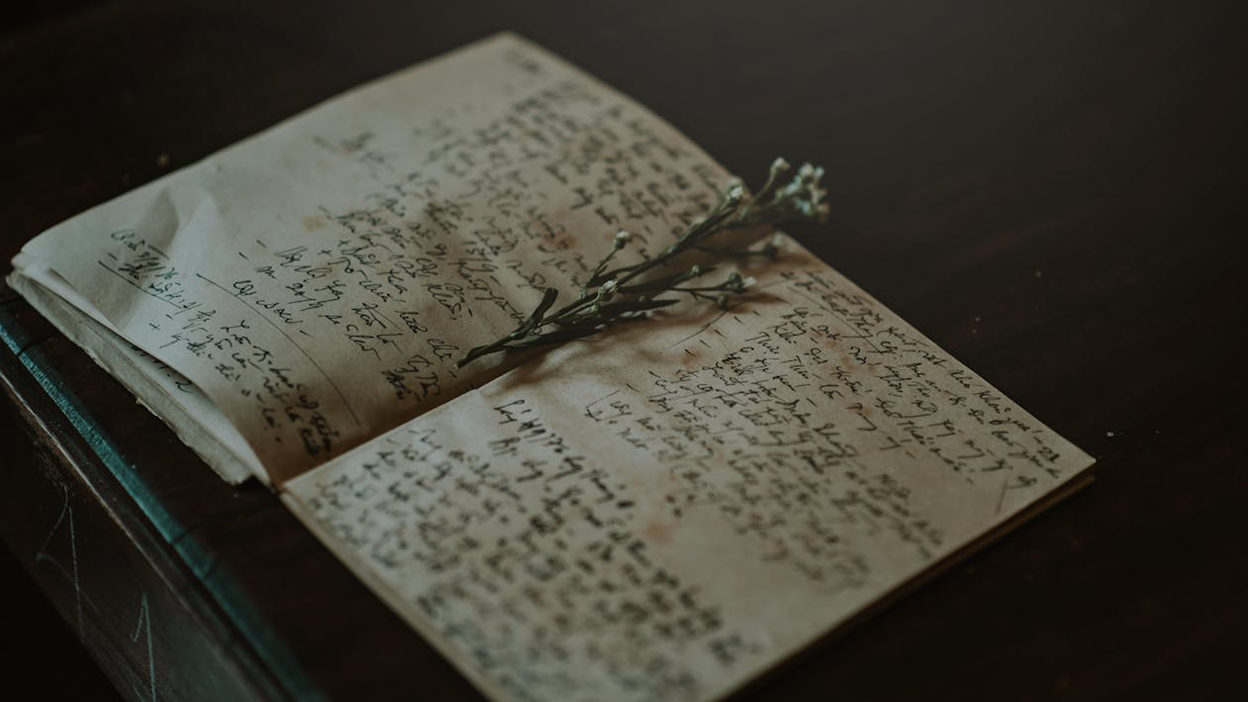
Photographed by Min An

Out of all the topics ever featured in a story, I find myself gravitating towards interpersonal relationships the most. The bonds people form with each other, whether short-lived or lasting, healthy or harmful, marked or minor, can be depicted in countless ways.

Someone walking into a person’s life is enough to create an entire work of art.

The same can be said about someone disappearing.

Bereavement, unfortunately, is an experience that most will have to live through sooner or later. Though you grow up seeing depictions of the process in stories, or the news, or the people that exist in your life, nothing ever prepares you for when your turn comes. I’ve learned that a few times across my twenty years, through the passing of both family and friends, as well as the limbo each one’s aftermath locked me in. Whilst writing has always been my antidote, my personal playground to unpack whichever feelings I want to explore, there are just some things a pen can’t fix. It took me years to even consider tackling my grief through my work, and though the task drained me of my efforts and tears, I can now say I’m very grateful for it.

In my second-year module ‘Writing The Short Story’, I wrote a piece called Zephyr – a story about two boys, Alistair and Deacon, navigating the passing of their best friend, Zephyr. Whilst I’m not Alistair or Deacon, and our stories aren’t perfect matches, we have experienced the same pain. Mine was the foundation that theirs grew from. Looking back on the process, I’ve never struggled so much in the creation of anything before. Facing the demons of procrastination and plot stagnation is hard enough. Reliving a period of your life where you couldn’t smile without feeling guilty isn’t a whole lot better.

Any writer who’s crafted a story personal to them will likely be able to understand an experience of this sort, even if they haven’t lived through bereavement specifically. The breakdown of a relationship, strained feelings about family who should support you but don’t, entering a new environment without the slightest clue of how to navigate it. All are universal experiences. To create art inspired by hardship requires digging into uncomfortable corners of your mind, to claw at the scabs over memories that still bleed from time to time.

You risk setting off every emotion that’s capable of consuming your life, and that’s difficult.

Very difficult.

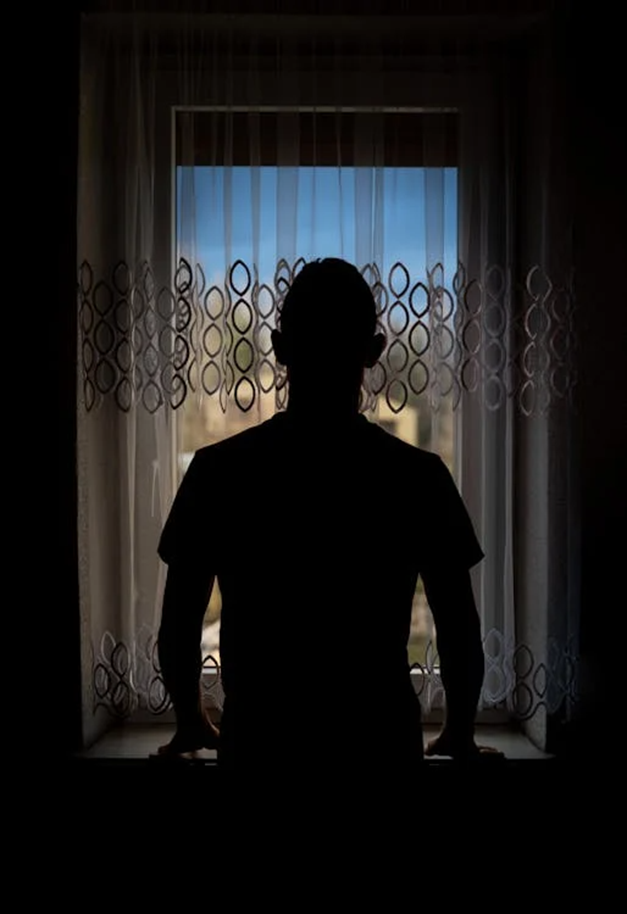
Photographed by Damian Barczak

I learned a lot writing Zephyr, about myself and my creative process, with there being some lessons that I think are worth sharing. 

  1. Your writing doesn’t have to be autobiographical. Exploring your feelings in a scenario that isn’t exactly your own can be a useful way to process them and even gain a new perspective on what you went through.  
  1. Wait until you’re ready to write about your chosen topic. That may be immediately, but if it’s not (it wasn’t for me), that’s completely fine. Knowing your limits is key here; your notebook/laptop/scattered sheets of paper will still be there for you when the time is right. 
  1. Be kind to yourself. As easy as it is to say, taking care of your wellbeing whilst writing about hardship (and in general) is vital. If you need to take a snack break, go for a walk, or even write something entirely different for a while, do it. You’ve already faced enough pain as it is, you owe it to yourself not to undergo any more that can be avoided. 

Before Zephyr, the idea of writing about bereavement or my grief was daunting and a task I ran from altogether. Having done so now, I sit here with a story and characters that I love, and some closure on the struggles I’ve faced. It helped me. Maybe it could help you. Whether it’s now, in a few months, or a few years, the process will be tough, but it’s worth taking the time to try. 

EJ Watson is primarily a fiction writer and poet who describes himself as a ‘pessimistic optimist’. His work follows his belief that there are no “right” ways to overcome hardship, exploring topics such as self-perception, self-worth, and interpersonal relationships. You can usually find him juggling more projects than he would recommend, marathoning Studio Ghibli films, or yapping about the Ace Attorney franchise. Follow him on Instagram: @_ejwatson_ 

The Brunel Creative Writing Prize 2024

Text against colourful purple and green background: Brunel University London - The Creative Writing Prize in partnership with Johnson and Alcock literary agency.

At Brunel Winter Graduation I was delighted to learn that I had been awarded the 2024 Creative Writing Prize in partnership with literary agency Johnson & Alcock.

I began studying Creative Writing part-time at Brunel University in 2022 after leaving a job in Marketing and Communications. I began the course feeling burnt out and hungry for inspiration. Over the next two years I found plenty – from reading George Saunder’s A Swim in a Pond in the Rain, Benjamin Zephaniah’s Refugee Boy and Helen Cullen’s The Truth Must Dazzle Gradually in my Elements of Fiction class and gaining invaluable feedback from my peers in our group discussions; laying the foundation for what would later become my dissertation in Planning a Novel; and returning for my second year to study The Art of the Monologue with Bernardine Evaristo and Angela Ekaette Michaels. I have never been particularly good at public speaking – before taking the class I would often feel my throat close up when addressing a crowd. I remember once, during my undergraduate at Leeds University, watching the piece of paper I was reading from shaking like it had a life of its own. But the techniques I learnt during our classes changed that, and in August of 2024, I was able to feel genuinely relaxed on stage when reading at the launch party of Borderless – an anthology I co-created alongside five other students at Brunel University (Alexia Guglielmi, Sundus Hassan-Nooli, Mahjaben Hussain, Harshita Kaushik and Neelam Sharma) in tribute to Benjamin Zephaniah.

Before it was time to start my dissertation, I learnt about the publishing world in Writers at Work where we gained insights about traditional and self-publishing routes, as well as other work avenues that writers often explore. For my project, I dived into the archives at the Bishopsgate Institute, which later helped bring the historical aspects of my novel to life. 

My novel, which I plan to finish by the end of 2025 (now it’s in writing I’ll have to hold myself accountable), is split between two perspectives – Zoya and her daughter Guddu. Zoya leaves India after Partition and tries to forget the life she left behind, but Guddu, who wishes to unearth what has been hidden, immerses herself in a world of punk, activism and rebellion. In the first section of my novel, the reader follows Zoya through 1950s London as she tries to build a home in a hostile environment. My dissertation supervisor, Daljit Nagra, was able to guide me through areas I found difficult and advise me on ways to improve the flow of my writing.

However, post-dissertation, I found it challenging to continue writing without the structure and deadlines my MA gave me. I believe having the Creative Writing Prize is a testament to the ongoing support Brunel shows their student post-graduation, as meeting with Charlotte Seymour at Johnson & Alcock has rekindled my drive to write. Charlotte has encouraged me to look at my work from different perspectives, as well as pinpointing parts I could develop. The prize also means that once I have finished my manuscript, I gain a full readthrough, editorial feedback, and the possibility of representation by Johnson & Alcock. Knowing this has taken the pressure off what can seem like an overwhelming process of writing a manuscript to completion and sending it off into the ether hoping someone, somewhere will read it. However, even without the prize, attending Brunel has meant that I have gained a very supportive network of creative writers, where we send one another passages for feedback and make sure we meet our self-imposed deadlines. 

Prior to attending Brunel, completing and publishing my own novel seemed a bit like a pipedream, but post-graduation it feels far more obtainable.

(Mira Mookerjee)

Creative Writing Prize Winner Mira Mookerjee at Brunel University of London Winter Graduation 2024
(image copyright Mira Mookerjee)

Congratulations to Brunel University of London Creative Writing Prize Winner Mira Mookerjee and to Runner-up Lauren Earle, from the Brunel University of London Creative Writing Team and all at Brunel Writer!

The Creative Writing Prize in partnership with Johnson & Alcock

Creative Writing at Brunel University of London is pleased to announce the Creative Writing Prize in partnership with literary agency Johnson & Alcock.

The competition gives aspiring writers the opportunity to flex their creative muscles and potentially gain representation from a literary agent.

Dr Frazer Lee, Postgraduate Programme Lead and Reader in Creative Writing said: “The Creative Writing department is thrilled to partner with Johnson and Alcock literary agency for the Creative Writing Prize. The prize represents a truly fantastic opportunity for our talented postgraduate taught students, and we are excited to announce the winner at Winter Graduation.”

Here’s all you need to know:

About Johnson & Alcock:

Johnson & Alcock is a leading literary agency, now in its seventh decade and constantly expanding and innovating. Our four book agents work with our head of rights and a full administrative team for a vibrant list of authors from all over the world, both new and emerging writers and the long-established, in fiction and non-fiction. These include prizewinning and bestselling authors and literary estates across genres and in all forms of media, both in the UK and internationally.

Am I eligible?

Entries will be accepted by:

  • Students on Brunel’s Creative Writing MA course who are submitting a book project for the dissertation module in the current (2024 – 2025) and next academic year (2025 – 2026).

What’s up for grabs?

The winner receives:

  • A 1-to-1 session with an agent (in person or online)
  • A full manuscript read (should you decide to complete the book) and editorial feedback
  • The potential to be offered representation by Johnson & Alcock once the MS is completed (NB: subject to suitability. Please note that no guarantee of representation is made and the agency’s decision is final)

Runners up (up to two students) will receive:

  • An online consultation with an agent

How will the winner be chosen?

Literary agents from Johnson & Alcock will make their decision based on the sample chapters submitted as part of your final dissertation project.

When will the winner be announced?

At Winter Graduation in December. Keep an eye on #BrunelWriter socials for the announcement.

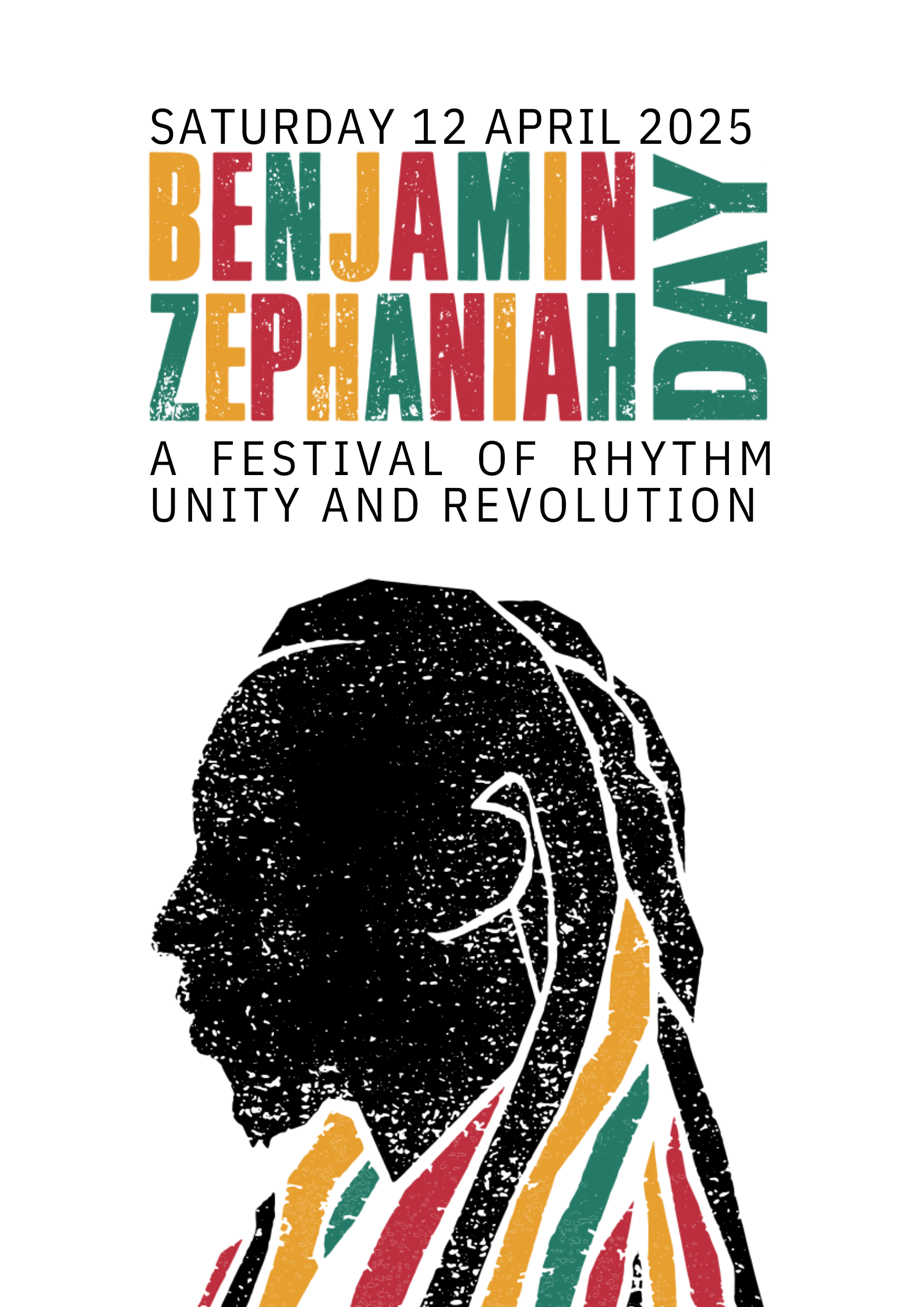
Honouring the Memory of Professor Benjamin Zephaniah: A Literary Anthology by Brunel Creative Writing Students

by Sundus Hassan Nooli (on behalf of the Brunel Literary Anthology)

A few days before the MA Creative Writing 2023 Winter Graduation, everyone – students, professors, readers – was rocked by the passing of Benjamin Zephaniah. His passing was felt around the world. And as the other side made way to greet him, it was beautiful to witness how many people were honouring his memory and art.

Benjamin Zephaniah was and still is a towering figure in the literary space, whose shoulders many of us, pupils, friends, and otherwise, stand upon.

To honour his powerful work in championing refugees, migrants, Blackness, humanity, justice, freedom, and street politics, the Brunel Literary Anthology invites former and current Creative Writing students from Brunel University London to submit their prose and poetry to BLA.

All are welcome to submit multiple works within a single submission, as long as they keep to the overall word count (further details below).

We welcome submissions of both poetry and short stories of any genre, including abstract and experimental fiction.

The submission guidelines are:

PROSE: 1,500 word limit, original piece, must not have been published elsewhere (personal websites and blogs included).

POETRY: Up to 4 poems.

For simultaneous submissions, in different genres, see example below:

You can submit up to:

• 2 short stories

OR

• 4 poems

OR

• 1 short story and 2 poems.

Deadline: February 26, 2024. Any and all questions and inquiries can be sent to blabla24@gmail.com. Submission link and further information can be found on our Instagram page.

With the blessing of Prof Zephaniah’s wife, all proceeds BLA makes will go directly to a charity of her choice.

The Brunel Writer Prize 2023

Every year, The Brunel Writer Prize is awarded to the student with the highest graded article submission for the Creative Industries module on Brunel University’s Creative Writing Programme. This year’s winner is Jess Mival – congratulations Jess! Jess draws on her experience of freelancing to provide her fellow students with some excellent advice on…

How Not to Freelance at Uni

It’s 2am on a Wednesday night or, I suppose, a Thursday morning. You have a lecture in seven hours but haven’t slept because you have a work deadline in twelve hours. You’re hungry; you’ve only had three potato waffles and four diet cokes in the last fourteen hours.

            What’s wrong with this picture?

Juggling work alongside university is hard. Anyone who says it is easy, is lying. Anyone who says it is manageable, is not lying. They’re annoying, but they’re not lying. I decided to #girlboss my way through uni and start freelancing, for many reasons. Working for myself? Amazing. Choosing my own hours? Stunning. Getting to say things like ‘just need to hop on a call with one of my clients’? Sensual. I signed up with Paperound, a website that helps students get freelance jobs, and started getting work quickly, saying ‘yes’ to pretty much any task requests that came my way.

Flash forward a couple weeks and the work is piling up. It’s only the beginning of term so it’s fine for me to prioritise work at the moment, right? I’ll just miss that lecture; I can watch it back online and I really want to take on this new client and I know I missed last week but I’m not feeling very well at the moment anyway.

And it’s all going great! It’s so great and fine and great! I’m drowning in uni deadlines and one of my clients wants me to rewrite the last 1000-word article and another wants me to create six more social posts by 5pm and I’ve had a headache for two weeks and I’ve run out of diet coke but I’m great!

            Again. what’s. wrong. with. this. picture?

Spoiler alert: everything wasn’t fine. The classes I missed, or slacked to prioritise work, were the ones I ended up getting my lowest grades in, and I wasn’t producing the best quality work for my clients either. This is what I mean when I say working alongside uni isn’t easy, but it is manageable. You can juggle both whilst staying (sort of) sane, it just requires a little bit of that dreaded time management.

Now that you’ve seen how not to do it, I’ll try and actually be helpful. Something that really made a difference to me was completely separating my uni time from my work time. If you have a class 9-12, try and spend the afternoon doing uni work rather than work work. Realistically, you shouldn’t put yourself in a situation where you are having to spend every hour outside of your classes doing your freelance work. If you have classes all throughout the week, spend time at the weekend doing your freelance jobs or, if you have a weekday off, spend that day doing them.

If you really want to make it all work, I’d suggest getting a planner or at least writing stuff down on your notes app. Doing a to-do list might sound like the most mundane of solutions, but they’re so much more helpful than you think! Plus, if you write down things like “eat lunch” and “brush hair” you get to tick more off, which is way more fun than it should be.

Let’s head over to present day, shall we? It’s 6pm on a Thursday night and you’re closing your laptop. You’ve finished up an article for one client and four social posts for another and you’re now getting to tick those bits off your list. Your list for tomorrow is completely university-related, plus watching an episode of whatever terrible reality TV show is on. You’re going to make your dinner. It will be pasta, but it will have vegetables in it. Probably. Your life is not 10000% together but you are managing. That’s all you can do, really, is manage, and you’re doing it pretty well.

Jess Mival is a BA Creative Writing graduate from Brunel University. She is now studying for her MA in Professional Writing, at Falmouth University. Words have always been the centre of Jess’ universe; her Mum has said that “once she started talking, she didn’t stop.” If Jess isn’t talking, she is writing. If she isn’t writing, she is reading. Jess is, funnily enough, not good at maths.

London Book Fair 2023: First Impressions

By Emma Lindsey

If you accept as I do, that ‘being a writer’ is akin to a form of mental illness, whose symptoms include (but aren’t restricted to): inventing places and people, spending such long periods in isolation that, ideally, you are able to draw maps, form relationships and hear their voices –  then the London Book Fair, (LBF), the largest spring book trade and publishing event in the world, offers a mix of immersion therapy and respite from the confines of your own head.

A newbie, I have few expectations of LBF23, beyond imagining that it will offer the chance to meet famous authors,  hunt down hungry agents and publishers,  to whom I can pitch my novel, hand over my synopsis and maybe even get an on-the spot, international publishing deal – or at least secure a date for a meeting.

Day one. Armed with a pass and lanyard, I follow the smart but casually dressed herd from Baron’s Court tube, then enter, blinking into the bright lights, where I quickly feel as if I’ve gained access to a literary banquet. Thousands (25,000 over the three days), have converged, from 135 countries, across Europe (Ukraine is in the spotlight this year); the US, South America, Africa, UAE, China and India.

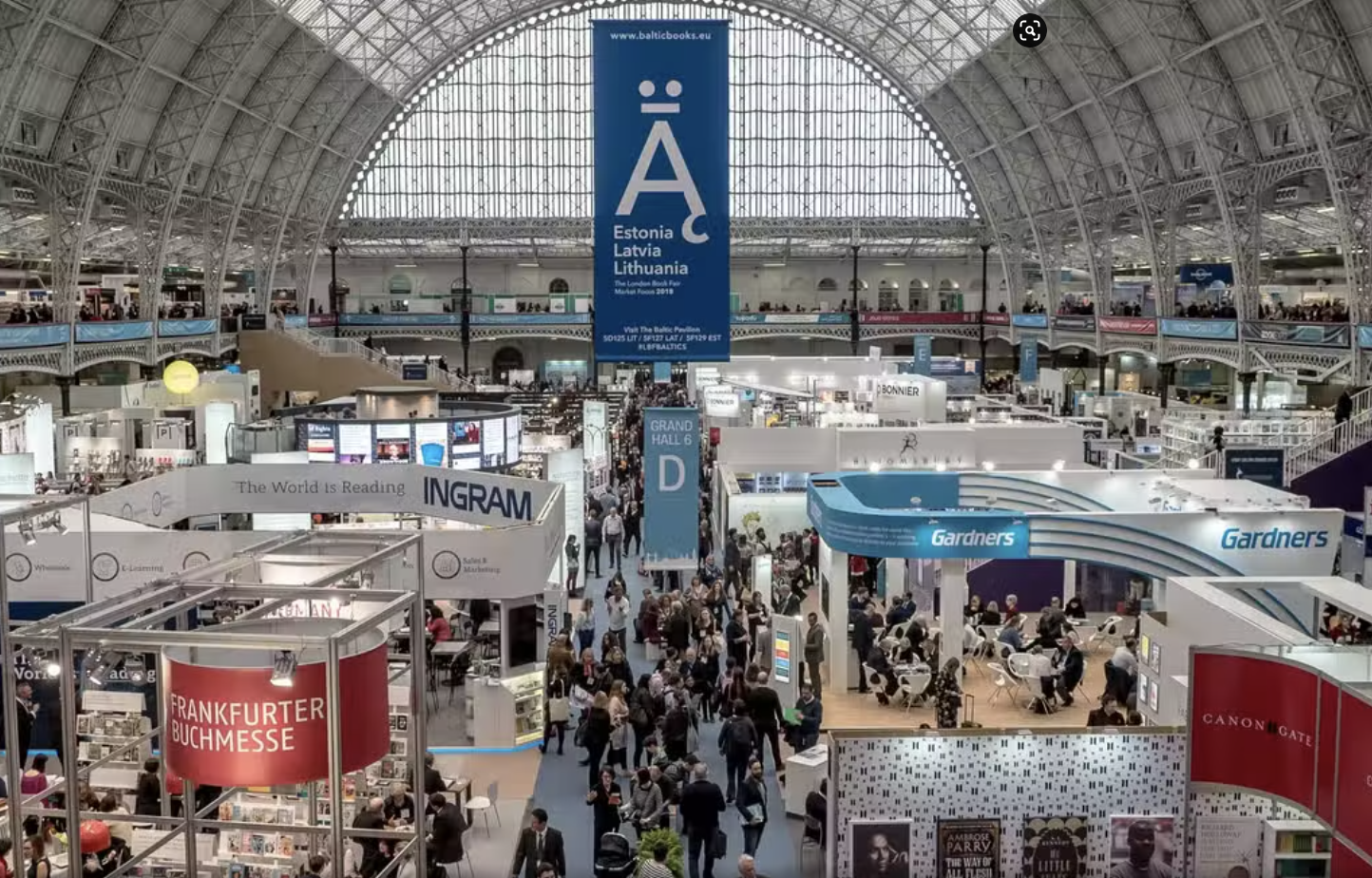
If you’ve never been to Kensington Olympia – which I hadn’t before – imagine Kings Cross station, but crammed with stalls from not only every component of publishing, but variety of publisher. Lots of purple, blues and reds, along with vast, technicolour hoardings promoting best-selling and soon-to-be, book covers, from just about every genre.

Hungry agents and publishers there are aplenty, albeit safely roped off from the public, and with an extra layer of security thrown in.  From afar, we’re able to look but not touch the inner sanctum, where behind Perspex screens and hunched over laptops, they negotiate rights deals.  From the harried body language and the buzz, big numbers are being crunched.

For once, I’ve been super-organised, put together an itinerary of seminars, and despite the surging hoards, manage to find Making my WiP stand out, then a group of friends, who’ve also noticed how strangely lacking in diversity the event seems to be. Then onto  Keeping up with social media , which I leave early to listen to Author of the Day, Colson Whitehead and then need to refuel with extortionately priced coffee and a thin sandwich. Our group splits up, some to find out How to get a Badass Book Deal, another to chat to TikTok about reaching ‘hard to reach’ readers, and others to Creating a writing community. I do manage to meet a couple of agents and editors at a pop-up networking session, organised by a kind author and inclusivity champion.  Duly I reel off my pitch and am asked to submit my proposal. Feels like a gazillion bees buzzing in my head by the time I get home.

Day two. Today I’ve brought my own snacks and head to Chelsea, for a one-day writer’s summit only to discover it’s not included, will cost £199, so it’s back to Olympia where I catch Leone Ross and Irenosen Okojie in conversation. They’re amazing on making magical realism and speculative fiction; refreshingly honest and upbeat about the rollercoaster ride to publication, the obstacles and ways to get past them. Writing in ferocity (aka ignoring the urge for coffee to get that next sentence down), is Ross’s tip – that and stubbornness in the face of rejection. British black publishing pioneer and now President of PEN, Margaret Busby is in the audience, along with a raft of independent booksellers, publishers, screenwriters and poets, all sharing stories  which show that the  industry is moving, albeit like an oil tanker, very slowly, towards diverse stories. It’s an oasis in the desert which no-one seems keen to leave, but socials are swiftly swapped before the next session starts. Then it’s onto a panel chaired by Dialogue Books’ director, Sharmaine Lovegrove, about celebrating inclusivity and representation in the book and publishing world, with the caveat, “It’s really hard to keep having to explain why our stories matter”.

There is a day three but I can’t take in another thing so give it a miss. Sensory overload aside, (there are no quiet spaces, nor a crèche, interestingly), it’s been fascinating to not only see all the components of the publishing business under one roof and how they fit together, but also to be there and feel part of it. Seeing the major and minor players; who’s talking to whom and about what, is a protein-shake boost to my sense of, ‘being a writer’ and an author.  Now I understand what I’m up against, I have more tools at my disposal, including the most important: hope tempered with ferocity.

A former journalist and digital producer, Emma Lindsey is in the final stretch of a part-time MA in Creative Writing at Brunel University London.

21 Miles Publishing Opportunity

Short poetry on the themes of migrants and refugees is sought for a new photobook by Brunel University photographer and artist, Chris Dundon-Smith. Brunel University is currently supporting Chris on the photojournalism project, 21 Miles. The photobook and poetry will form part of a multi-media installation at Ambika P3 Gallery in London (Nov 2022) and will then go on tour at a selection of galleries in 2023.

21 Miles is a multimedia documentary project that aims to describe the experience of the perilous twenty-one-mile journey across the English Channel, made by those seeking safety and asylum in the United Kingdom.

The video and audio installation uses a single photograph taken in the middle of the English Channel and combines it with over 400 smart-phone audio recordings taken from actual Chanel crossings, and the artist’s own recordings while on location.

In addition, the video installation is supported by a photobook that focuses on the physical and emotional signs and traces this demanding and terrifying journey leaves behind.

Some of the work can be viewed here.

https://chrisdundonsmith.myportfolio.com/21-miles

This is a non-profit passion project to raise awareness of the current situation and dangers facing people crossing the English Channel. Unfortunately, this is not a paid opportunity and very much aimed at those seeking to contribute to the cause due to an interest in the project or in writing poetry on the subject. There will however be the opportunity to feature in the photobook and the installation, and attend shows, as the work tours after the Ambika P3 show. There will also be a copy of the photobook provided to any successful applicants.

The poetry can be already existing work on these themes, or something new based on the work itself. The deadline for submitting will be 4th October 2022.

For more information, please contact Chris:

chris.dundon-smith@brunel.ac.uk

Thank you.