The Brunel Creative Writing Prize 2024

Text against colourful purple and green background: Brunel University London - The Creative Writing Prize in partnership with Johnson and Alcock literary agency.

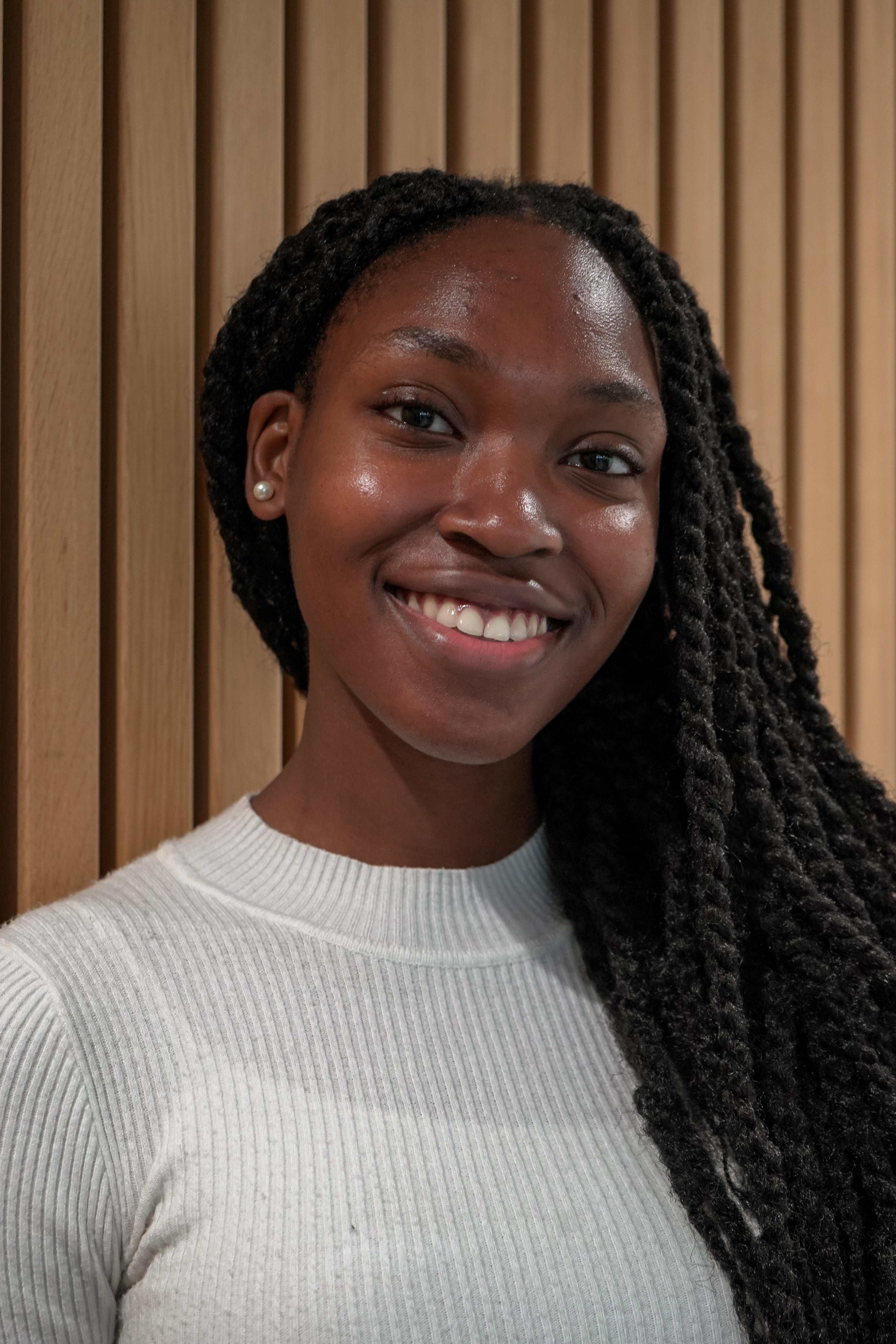
At Brunel Winter Graduation I was delighted to learn that I had been awarded the 2024 Creative Writing Prize in partnership with literary agency Johnson & Alcock.

I began studying Creative Writing part-time at Brunel University in 2022 after leaving a job in Marketing and Communications. I began the course feeling burnt out and hungry for inspiration. Over the next two years I found plenty – from reading George Saunder’s A Swim in a Pond in the Rain, Benjamin Zephaniah’s Refugee Boy and Helen Cullen’s The Truth Must Dazzle Gradually in my Elements of Fiction class and gaining invaluable feedback from my peers in our group discussions; laying the foundation for what would later become my dissertation in Planning a Novel; and returning for my second year to study The Art of the Monologue with Bernardine Evaristo and Angela Ekaette Michaels. I have never been particularly good at public speaking – before taking the class I would often feel my throat close up when addressing a crowd. I remember once, during my undergraduate at Leeds University, watching the piece of paper I was reading from shaking like it had a life of its own. But the techniques I learnt during our classes changed that, and in August of 2024, I was able to feel genuinely relaxed on stage when reading at the launch party of Borderless – an anthology I co-created alongside five other students at Brunel University (Alexia Guglielmi, Sundus Hassan-Nooli, Mahjaben Hussain, Harshita Kaushik and Neelam Sharma) in tribute to Benjamin Zephaniah.

Before it was time to start my dissertation, I learnt about the publishing world in Writers at Work where we gained insights about traditional and self-publishing routes, as well as other work avenues that writers often explore. For my project, I dived into the archives at the Bishopsgate Institute, which later helped bring the historical aspects of my novel to life. 

My novel, which I plan to finish by the end of 2025 (now it’s in writing I’ll have to hold myself accountable), is split between two perspectives – Zoya and her daughter Guddu. Zoya leaves India after Partition and tries to forget the life she left behind, but Guddu, who wishes to unearth what has been hidden, immerses herself in a world of punk, activism and rebellion. In the first section of my novel, the reader follows Zoya through 1950s London as she tries to build a home in a hostile environment. My dissertation supervisor, Daljit Nagra, was able to guide me through areas I found difficult and advise me on ways to improve the flow of my writing.

However, post-dissertation, I found it challenging to continue writing without the structure and deadlines my MA gave me. I believe having the Creative Writing Prize is a testament to the ongoing support Brunel shows their student post-graduation, as meeting with Charlotte Seymour at Johnson & Alcock has rekindled my drive to write. Charlotte has encouraged me to look at my work from different perspectives, as well as pinpointing parts I could develop. The prize also means that once I have finished my manuscript, I gain a full readthrough, editorial feedback, and the possibility of representation by Johnson & Alcock. Knowing this has taken the pressure off what can seem like an overwhelming process of writing a manuscript to completion and sending it off into the ether hoping someone, somewhere will read it. However, even without the prize, attending Brunel has meant that I have gained a very supportive network of creative writers, where we send one another passages for feedback and make sure we meet our self-imposed deadlines. 

Prior to attending Brunel, completing and publishing my own novel seemed a bit like a pipedream, but post-graduation it feels far more obtainable.

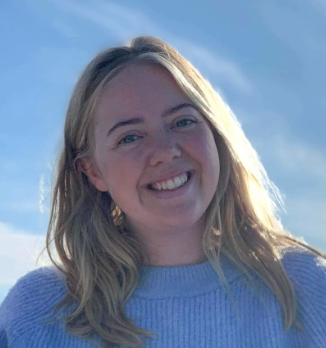
(Mira Mookerjee)

Creative Writing Prize Winner Mira Mookerjee at Brunel University of London Winter Graduation 2024
(image copyright Mira Mookerjee)

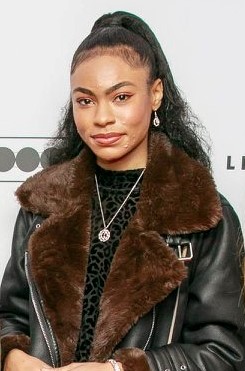
Congratulations to Brunel University of London Creative Writing Prize Winner Mira Mookerjee and to Runner-up Lauren Earle, from the Brunel University of London Creative Writing Team and all at Brunel Writer!

The Creative Writing Prize in partnership with Johnson & Alcock

Creative Writing at Brunel University of London is pleased to announce the Creative Writing Prize in partnership with literary agency Johnson & Alcock.

The competition gives aspiring writers the opportunity to flex their creative muscles and potentially gain representation from a literary agent.

Dr Frazer Lee, Postgraduate Programme Lead and Reader in Creative Writing said: “The Creative Writing department is thrilled to partner with Johnson and Alcock literary agency for the Creative Writing Prize. The prize represents a truly fantastic opportunity for our talented postgraduate taught students, and we are excited to announce the winner at Winter Graduation.”

Here’s all you need to know:

About Johnson & Alcock:

Johnson & Alcock is a leading literary agency, now in its seventh decade and constantly expanding and innovating. Our four book agents work with our head of rights and a full administrative team for a vibrant list of authors from all over the world, both new and emerging writers and the long-established, in fiction and non-fiction. These include prizewinning and bestselling authors and literary estates across genres and in all forms of media, both in the UK and internationally.

Am I eligible?

Entries will be accepted by:

  • Students on Brunel’s Creative Writing MA course who are submitting a book project for the dissertation module in the current (2024 – 2025) and next academic year (2025 – 2026).

What’s up for grabs?

The winner receives:

  • A 1-to-1 session with an agent (in person or online)
  • A full manuscript read (should you decide to complete the book) and editorial feedback
  • The potential to be offered representation by Johnson & Alcock once the MS is completed (NB: subject to suitability. Please note that no guarantee of representation is made and the agency’s decision is final)

Runners up (up to two students) will receive:

  • An online consultation with an agent

How will the winner be chosen?

Literary agents from Johnson & Alcock will make their decision based on the sample chapters submitted as part of your final dissertation project.

When will the winner be announced?

At Winter Graduation in December. Keep an eye on #BrunelWriter socials for the announcement.

Joining the LinkedIn Sea by Grace Amui

Every year, The Brunel Writer Prize is awarded to the student with the highest graded article submission for the Creative Industries module on Brunel University’s Creative Writing Programme. Grace Amui was a runner-up for The Brunel Writer Prize 2024 with her journey and tips to “Joining the LinkedIn Sea.”

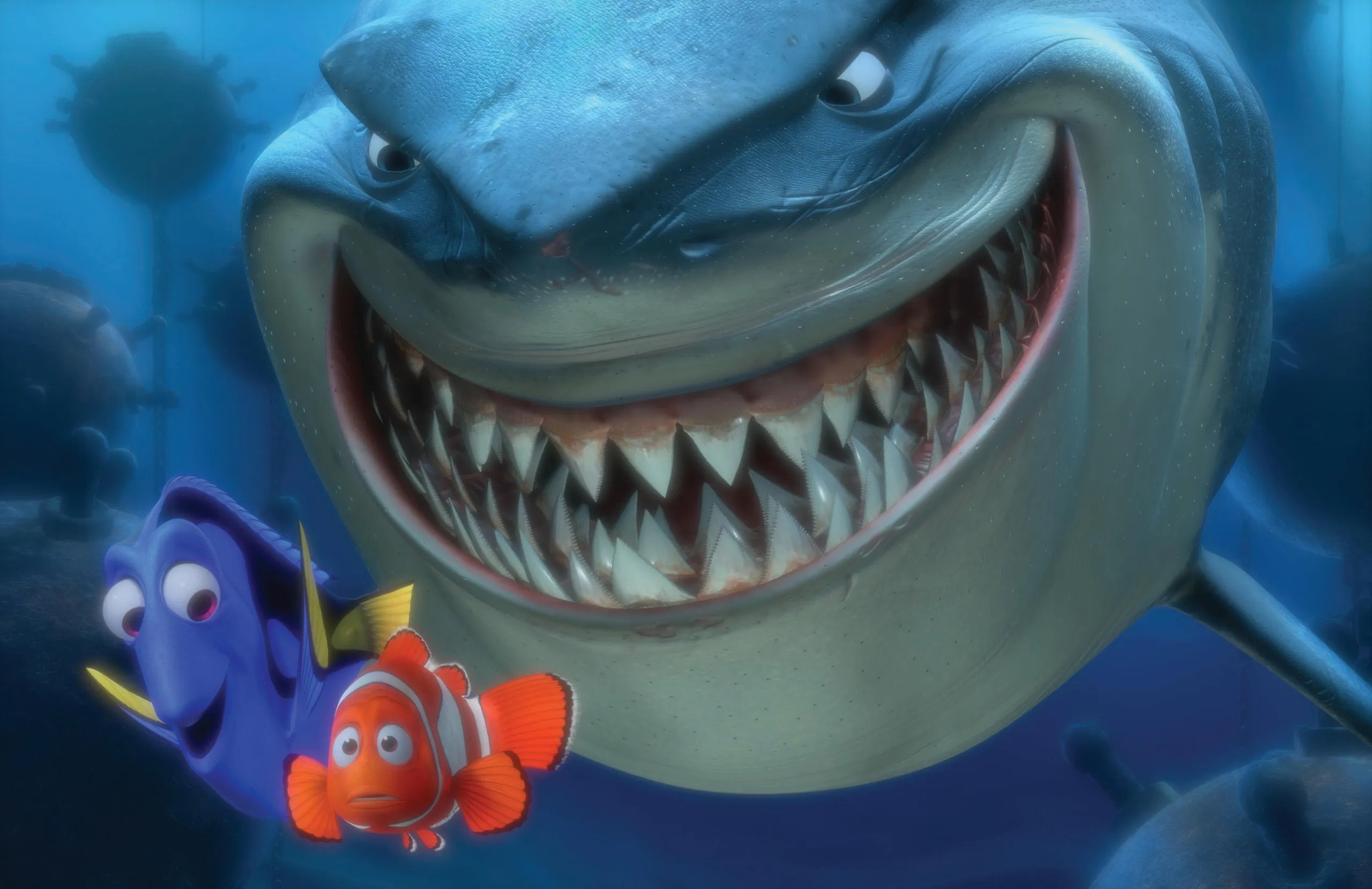
© Disney

You see it, the end on the horizon. The finish line with a gown, certificate and Professor Andrew Jones calling your name – hopefully pronouncing it correctly.
 
Graduation.
 
It’s exciting. As High School Musical demonstrates, expect singing, or screeching depending on your vocal ability. No judgment though.
 
If you’re anything like me, you realise there’s a world beyond our Uxbridge campus. A sea of people who seem to know each other and know what they’re doing with these very people who know each other.

But how can we, the new fish, submerge into this creative community?
 
I’ll give you a hint. It’s used for entertainment, procrastination and most importantly connection.
 
Yep. Social Media or… social networking.

Which one?


For creatives, there’s a sea of choice between TikTok’s #Booktok, Twitter – now X, the rarest letter of the alphabet – and Instagram, taking Reels and Threads from them both. However, here’s your invitation to explore a special ocean space I admittedly used to think was solely for Baby Boomers.
 
That’s right: LinkedIn.

© Disney – Don’t run, Forest, don’t run!

It’s not only for swimming accountants with decades of experience. Nor salmon with unusual Elon Musk-level knowledge of Artificial Intelligence. LinkedIn is simply another tool for building connections.

If leaving university sounds daunting, here’s how you can join this professional wave of “grown-ups.” 

  1. The Profile Photo: Unlike Instagram, where a cat driving a Ferrari proves a priceless photo for your meme account, LinkedIn profiles are about you. Yes, the profile photo should be your lovely face.

Keep it simple, head and shoulders – not the shampoo, although, again, I ain’t judging. Smile with a plain white background or industry logo where you’ve worked as a subtle self-promotion.

© Disney – Say, cheese!
  1. The Big CV: Upload a CV that gives information about roles you’ve had in the field you’ll apply for. No CV? Check out Brunel Careers and ASK for examples or use Chat GPT to start. Just remember Simona Janssen’s words: “Artificial Intelligence always needs a little HI“: Human Intelligence.
  1. Avoid the silent treatment: Now that your profile shines, post. Not about the holiday in Spain… what happens in Madrid stays there. Still, share relevant work in your sphere. New blog? Share it on your LinkedIn page. Attended a leaders’ talk? That too. Share, share, share when these happen with – you guessed it – more photos. These posts show that you’re even more than your CV. Why?

It tells the big fish you mean business!

  1. Followers or… friends: On this social network, think of followers less as strangers and more like potential friends you’ve met at a Christmas party – minus the drinks. LinkedIn’s head of marketing, Tobi Demuren, said more online friends cause LinkedIn’s algorithms to suggest your profile to others! Like networking, the more individuals you know, the better. So, get adding!
  1. Smaller communities: In any sea, there are smaller fish-communities. Join places like #Brunelalumni. That’s automatically 8000+ possible LinkedIn connections, including me! You’re basically famous now.
  1. LinkedIn Learning: These diverse courses enhance both you and your CV. From navigating “Artificial Intelligence” to “Overcoming Overthinking.” This may seem irrelevant, but the big-shark professionals produce these for those with LinkedIn premium…

Or Brunel students! Yay, FREE LinkedIn courses.

Fish in a Pond

As with anything, joining the ‘grown-ups’ table may feel daunting, but don’t let that predator, Imposter Syndrome stop you from taking that empty chair: which was really set for you in the first place. 

Remember, you have something to give this world. 

Then, Creative, just keep swimming.

© Disney – No seriously, swim and see. 

Grace Amui presents her poetry internationally and at age 22, her first musical, “This Is Me,” was performed in several shows at SEK International School in Barcelona, Spain. As a freelance editor and editor for Brunel Writer, who knew her childhood library visits would lead to a Theatre and Creative Writing BA? 

Honouring the Memory of Professor Benjamin Zephaniah: A Literary Anthology by Brunel Creative Writing Students

by Sundus Hassan Nooli (on behalf of the Brunel Literary Anthology)

A few days before the MA Creative Writing 2023 Winter Graduation, everyone – students, professors, readers – was rocked by the passing of Benjamin Zephaniah. His passing was felt around the world. And as the other side made way to greet him, it was beautiful to witness how many people were honouring his memory and art.

Benjamin Zephaniah was and still is a towering figure in the literary space, whose shoulders many of us, pupils, friends, and otherwise, stand upon.

To honour his powerful work in championing refugees, migrants, Blackness, humanity, justice, freedom, and street politics, the Brunel Literary Anthology invites former and current Creative Writing students from Brunel University London to submit their prose and poetry to BLA.

All are welcome to submit multiple works within a single submission, as long as they keep to the overall word count (further details below).

We welcome submissions of both poetry and short stories of any genre, including abstract and experimental fiction.

The submission guidelines are:

PROSE: 1,500 word limit, original piece, must not have been published elsewhere (personal websites and blogs included).

POETRY: Up to 4 poems.

For simultaneous submissions, in different genres, see example below:

You can submit up to:

• 2 short stories

OR

• 4 poems

OR

• 1 short story and 2 poems.

Deadline: February 26, 2024. Any and all questions and inquiries can be sent to blabla24@gmail.com. Submission link and further information can be found on our Instagram page.

With the blessing of Prof Zephaniah’s wife, all proceeds BLA makes will go directly to a charity of her choice.

The Brunel Writer Prize 2022

Every year, The Brunel Writer Prize is awarded to the student with the highest graded article submission for the Creative Industries module on Brunel University’s Creative Writing Programme. This year’s winner is Nathalie Brundell who provides creative writers with some useful tips on the thorny issue of transferring fictional characters from one’s imagination to the page. Congratulations Nathalie!

Hearing Voices? Fear not, Writer

Like a search history filled with creative torture techniques, a writer with voices in their head is usually a good thing. 

Usually.

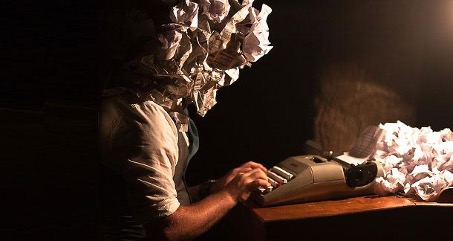
But sometimes, those voices can get a little too loud. We’ve all been there. Scented candles burning, movie scores playing softly, a steaming cup of your favourite drink – yeah, you’re ready. In fact, your fingers are itching, so you open the document and… 

There it is. The dreaded, blank page. And that blinking cursor – the worst torture technique discovered yet. Well? Come on, then, it says. Show me what you got. I can do this aallll day

As the seconds pass, your palms grow sweaty. Maybe… Maybe you’re not cut out for this, after all. You can’t even come up with one sentence that doesn’t sound like complete, utter garbage. And what if people hate it? Who could blame them – you have no clue what you’re doing! And…

Yeah – those voices.

Of course, none of the garbage they spew is actually true. It’s just fear, worry, perfectionism – whatever you want to call it. And while that ancient reptile brain of yours is just trying to protect you from excruciating, public shame… it’s also keeping you from actually writing.

In other words – you wanna finally finish a manuscript? Here’s how to beat those nasty voices in your head.

1. Create a Character

If there’s one thing we writers love, it’s a flawed character. So, get to it – give that shrill voice a name, a face, a personality. Who are they, and what are they afraid of?

Like that voice that just won’t stop criticizing you. Let’s call him Curt, shall we? Can you see those thin glasses he’s wearing, and that slick, villainous suit? Looking down at literally everyone?

Well, look closer. Maybe, someone told him long ago that the only way to make your way in the world is through perfection. Flaws and weaknesses? He sniffs them out like a trained dog, because if he can keep pointing out other people’s faults, maybe he doesn’t have to deal with his own. 

A pure ray of sunshine.

But I’m sure you can do even better than that. So, crack open your notebook. You don’t have what it takes. People will hate it. Your dream is silly and embarrassing. Who are the people saying these things, and why?

Take your time with it, and make it good – after all, you’ll be seeing a lot of these guys in the future

2. Make Friends

Alright, so you’ve got your characters. Now what? 

Curt, the haughty, judgy critic. Selma, the middle-aged woman with enough worries to give her a heart attack. Gordon, the “lazy” slug who would rather scroll social media, because if he actually tries something he might just fail at it. 

Shake hands, acknowledge them. These people aren’t going anywhere, so there’s no point ignoring them anymore. Instead, get comfortable around them. 

3. Take Back Authority

These flat, nasty characters – are they the ones writing the book, poem, script? No. You are. 

So, establish your authority. They can stay, sure, but they better know their place.

They likely won’t back down at first. But in time, you’ll learn how to recognize who is speaking, and how to talk them off their ledge. Selma, for example, probably just needs someone to settle her nerves – some kindness and reassurance goes a long way. 

Curt, on the other hand, just needs to be told to shut up every once in a while. And Gordon? No distractions for him. That comfort zone really is his kryptonite.

In other words, put them in their place. ‘Cause if you can learn how to take control over those inner voices?

You’ll finish that manuscript in no time.

Nathalie Brundell is a Swedish writer currently living in London. In daylight, she pays the bills as a copywriter working with sustainability-focused brands, but after dark, you’ll find her typing away at her first fantasy novel in the glaring blue light of her screen. Her work has previously been published in the Myths, Monsters & Mayhem anthology, a #1 anthology release on Amazon.

Brunel Creative Writing reaches new heights

Creative Writing at Brunel University has risen to 2nd in London in the 2021 Complete University Guide.

Brunel Creative Writing also ranks 13th out of 53 Universities across the whole of the UK, with an impressive 89% overall satisfaction rating from students.

If you’d like to join our growing community of Creative Writers and study on one of our BA, MA, or postgraduate programmes, get in touch with us here.

Kypsel, a new way to share art

Interview with Brunel student and founder of Kypsel, Luca Mouzannar

Brunel Writer – Tell us about Kypsel. What is it and how does it work?

Luca Mouzannar – Kypsel is a platform that directly connects writers with their fans and enables them to take part in the artist’s growth. On Kypsel, writers can freely publish and sell their work with the advantage of keeping full control over their work. We allow artists to publish their work with a few clicks without interfering in the artistic and creative integrity of the product. Once a book, web comic, music track or short story is published any buyer can resell the work to their friends on their own social networks. In return, the fans get a referral commission for every converted sale.

BW – How did you come up with the idea for creating this platform? Did it come from your own experience of trying to publish/sell creative work or did you simply see a gap in the market?

LM – A little bit both actually. One of the co-founders tried to publish work through traditional publishers and faced several issues – mainly low royalties, no flexibility in claiming these and a lot of changes to the creative product. At the same time, being surrounded by artists who do good work, I could clearly see a gap in the market, especially in the era of social media where it is so simple to publish a post but very hard to publish and sell creative work. When we think that Harry Potter was rejected by many publishers before finally seeing the light, it puts a lot into perspective!

BW – Has your experience of studying creative writing at Brunel played a part in the building of Kypsel as you continuously interact with young creatives?

LM – Of course! I have met so many talented people who have so much to express and I can see how difficult it is to get our work out there. Fans should be able to decide what is good work without any buffer. I’ve seen so many artists and creative talents fall into jobs they hate because they aren’t able to monetise their craft. Before we know it, a side job becomes a main job and writing becomes a hobby instead of a craft we can live off.

BW – Why should creatives choose to publish with Kypsel? How does it benefit them over other more known online platforms such as Amazon, Google Play, Spotify, etc.?

LM – The first big advantage is that Kypsel is free to use and offers higher royalties than any other platform. Remuneration is a lot fairer and the creative product itself remains untouched. Kypsel is more of a self-publishing tool than a publisher. It is extremely easy to start and work can be published with a few clicks. It is also a non-exclusive platform which allows creatives to use all the means at their best disposal to get their work out there and see for themselves what works best.

LM – We also believe the referral engine is unique to Kypsel and will incentivise fans to buy, refer and sell the work instead of downloading it for free. It is a great way to fight piracy and we believe it will amplify the authors’ success and give them access to audiences they might not have reached when using other platforms. We like to refer to this video to illustrate a lot of the issues with the bigger platforms.

BW – Do you see self-publishing as the future of publishing art or are renowned publishing companies and music corporations still the way to go?

LM – We sincerely believe self-publishing is the future of publishing because renowned publishers and music corporations take most of the profits and leave very little for the artists who put in the work. Fans are also the ones who promote the art they enjoy, so the role of those companies is becoming more and more obsolete, especially in the era of algorithms and social media. Another issue is speed. People, especially the younger generation, enjoy content more than the form it comes in and want it faster than ever. We also tend to trust people more than big entities so Kypsel exists to cut the middleman who slows down the process and doesn’t split profits fairly.

BW – Finally, where is Kypsel headed? What can we expect from this platform in the future?

LM – We are hoping it will grow exponentially and allow young artists to express themselves so we can keep reading the stories we love and listening to music we enjoy. We want to connect artists with their fans and expand our offer to include any virtual goods such as short movies and apps. Our vision is simply to free content from the boxes that it is usually put into because of industry standards that don’t match the current realities of web and social media and we believe this can go very far.

BW – Thank you Luca!

You can visit Kypsel here and start sharing your work today!

The Grim Reaping of Harvey Grieves – from Brunel coursework to a short film

by Alice Lassey

The initial idea for what became The Grim Reaping of Harvey Grieves arrived in 2015. It was the start of my first screenwriting module at Brunel, and I had to come up with an original idea for a ten-page short screenplay. Our tutor, Max Kinnings, had been very fair, giving us a week to produce just a title and logline to share with the class. Being completely unable to think of a dramatic idea I could do justice to in only ten pages, I decided on a comedy about an old man running away from the Grim Reaper. Quirky, right? Original? Fun? I certainly hoped my peers would think so because the only thing rivalling my fear of sharing my work is the eternal need for validation.

Though the insistence on having us share severely unpolished ideas with the class took me some time to recover from, that second year screenwriting module was one of the most enjoyable and – perhaps more importantly – most useful of the course, and for one reason in particular. Far more than any other, this module stressed the importance of developing an idea and editing your story before even starting the first draft, ensuring that major issues are resolved before they become deeply embedded in a full-fledged script. It’s something that has helped me a lot in my writing post-graduation, and something I wish I had kept in mind while writing my major project in third year – but the less said about that, the better.

So, I wrote the script, I wrote an essay about the script (why, Brunel?), I handed it in and… I got a B+. Not bad. I guess it was actually kinda funny. After that, the script just sat in a drawer (well, on a USB, this is the 21st century) for a few years, I graduated, didn’t write a thing for a shamefully looooong time, until…

2018. I’m back home with my parents in the North, I have no job, no social life, and no local production company wants to exploit my unpaid labour in exchange for ‘experience’ (believe me, I tried hard to persuade them). In my attempts to find creative opportunities that may help me scrounge something resembling a career, I sign up to a script surgery being run as part of the Independent Directions (INDIs) festival in Leeds. The only problem is since I have barely written a thing since graduating, I have no new scripts to submit, only that old thing gathering virtual dust in the digital drawer. My assigned reader was writer and actor Gaynor Faye, and her feedback (along with the fresh eyes that come after not looking at something for years) gave me a new perspective on the script and a new desire to work on it.

So I did. And then… back in the drawer. It didn’t come out again until this year when I submitted it for feedback at the recently-formed Northern Screenwriters Table, an online writer’s group that meets bi-weekly to feedback on members’ scripts. The response was very positive, and even before the meeting went ahead, I received an enquiry from one member asking if I had spoken to a director or producer about having it made.

Up until this point, I had always considered production for this script to be a non-starter. All the advice on making short films says to keep it simple, with one location and a limited cast. They don’t say ‘how about a chase across town involving a hospital, a bus, and an ambulance?’ I had no experience in making short films, and this script seemed too complicated, too expensive to make. This changed when Simon came on board because now the project had a producer with experience compiling budgets and who knew how to go about sourcing the necessary funding. Of course, the process of making the film cannot go ahead until that funding is secured, and at this stage, nothing is certain. We have applied (and continue to apply) to a number of industry sources, and are asking individuals to invest in the project through Kickstarter, where we are offering a selection of perks (such as exclusive merchandise and behind-the-scenes access) to backers.

The journey from that class in 2015 to here has been a long one, and with any luck, it will end up longer still, seeing the project through production, post-production, and the festival circuit. Most of it until this point though, has been spent with the script sitting untouched on my computer, so I suppose the moral of the story is (and this is something I am still reluctant to learn myself) – your work goes nowhere if you never show it to anyone. And if you do… perhaps you’ll find someone as passionate about it as you are.

If you’d like to find out more about The Grim Reaping of Harvey Grieves, or perhaps even invest (and getting your hands on some exclusive perks), the Kickstarter page can be found here: https://www.kickstarter.com/projects/simonbg/the-grim-reaping-of-harvey-grieves

Tomorrow’s launch of the Kickstarter campaign will be accompanied by a livestreamed launch event on YouTube (https://www.youtube.com/watch?v=U7klydtYaQI&feature=youtu.be&fbclid=IwAR3zBWr8HX0t3Nki28KjYaAHD9JmvrltavwM3sdlOo1vYPlOY_Wg9AYB4xk) and Facebook Live.

You can follow the project on social media (Facebook, Twitter, Instagram) at @harveygrieves.

Alice Lassey graduated in 2017 with a first-class honours degree in Theatre and Creative Writing. An aspiring filmmaker, she currently writes on film at her blog Extended Cut (www.extendedcut.co.uk) alongside developing script and prose fiction projects. She can be found on Twitter and Instagram at @alicelassey.

The Brunel Writer Prize 2020

Every year, The Brunel Writer Prize is awarded to the student whose article submission for the Creative Industries module on Brunel University’s Creative Writing Programme is the highest graded. This year’s winner is Perri Wickham. Perri’s article shows how she used the various skills acquired through the Creative Writing course in an exciting industry environment.


HOW MY SHORT FILM ‘LONDON MADE ME’ FEATURED ALONGSIDE RAPMAN’S ‘BLUE STORY’ SCREENING

by Perri Wickham

During an unproductive day of tapping through Instagram stories, I came across the LDN Filmmakers application.  The week-long course was organised by the Mayor of London and Digital Cinema Media to help applicants write, direct, and produce a short film.  I immediately swiped up, excited to put my screenwriting skills to use outside of my Creative Writing degree, to finally get behind the cameras, and to connect with aspiring filmmakers.

The application process was straightforward.  I had to write down my personal information and in 250 words, explain why I wanted to participate.  I felt this was a fantastic opportunity for me to get equipped with new skills as I had never made a film before, and to put my vivid imagination into action.  A week later, I received a notification to say that I was successful.

Industry members from Chocolate Films Production led the training at Genesis Cinema.  During the introductory session, they gave us a brief to base our plot on London.  They told us that each of our films would feature alongside the screening of Rapman’s new movie ‘Blue Story’ at Genesis, which turned the pressure up a notch.  ‘Blue Story’ is an adaptation of Rapman’s 2014 YouTube series of the same name that explores gang rivalries in London. 

I teamed up with six participants, and we were allocated a mentor for support.  We brainstormed ideas about what London meant to us, and how we could capture our message cinematically through the plot as well as visuals.

Initially, there was a miscommunication on our first idea, as everyone had slightly different visions, which was confusing.  Thanks to our mentor, we managed to narrow it down enough to pitch to the other groups and their mentors.  Receiving feedback was essential as it helped us to clarify our concept and make it appropriate for younger viewers, as our film was going to be screened in schools. 

My group and I decided to tell the story of a protagonist, who on her way home, reflects on London’s vibrant culture and how it shaped her into a successful adult, using flashbacks of her past.  It only made sense to add an inspirational spoken word poem to talk the audience through her journey.  Since I am a poet, I volunteered to write and perform the voice over.

After receiving training on how to use film equipment, we solidified our storyboard, then set out to film in Stepney Greene.  The first day turned out to be experimental, and we decided to extend our filming location to Stratford as it had more landmarks that would benefit the visuals.  We spent the next two days knuckling-down, ensuring that we had enough footage to make a high-quality final draft. 

The final day of the course was crucial, as we had to complete a rough draft of our edits and create a shot list for Chocolate Films, who would polish it.  We had a guest visit from Amani Simpson, the creator of his autobiographical short film ‘Amani’, and one of the main actors, Ellis Witter.  It was inspiring to see a director who had no experience, establish connections, and gain enough funding to compose a successful short film with over one million views.

On the 24th November, I attended my first red carpet premiere in Hollywood.  Okay, it was at the Genesis Cinema.  Watching my first short film on the big screen was a powerful experience, as I was able to witness how a project, I made in under a week could transform into a dynamic yet professional piece. 

LDN Filmmakers taught me that if you strongly believe in your vision, it is possible to execute it with the right equipment, no matter the time constraints.  Now that I’ve gained confidence as a filmmaker, I am determined to make my mark in the film industry, and that starts now.

You can find Perri’s short film “London Made Me” on LDN Filmakers.

Perri Wickham is a flourishing Creative Writing Graduate looking to make her mark in the Entertainment Industry.  Hailing from Southeast London, where the trains run slower, Perri currently freelances as a blogger for Fledglink, a journalist/comms assistant for Brits + Pieces, and writes poems as well as scripts in her spare time.  If she goes MIA it means she’s working on a special project.  Her material is very audacious!

Surviving The Horror That is Final Year Dissertation – by Amena Begum

‘What do you mean, I have to write a DISSERTATION?’

‘Well, I’m afraid that’s the only way you’ll be able to get your degree’, said the professor with a grin.

Dissertation…that’s a pretty big word and a rather terrifying concept, but as someone who’s gradually approaching the end of this experience, I can share some of the things I did to make it slightly more manageable. These tips and tricks certainly won’t make writing a dissertation a piece of cake, nor will it take away the stress, but it can certainly make life that tiny bit easier amidst the hundreds of other things that you’ll be required to do in final year.

You’ve got your topic, but you just don’t know where to begin. Completing a ‘disso’ can be a daunting task, since for many students this is the first time that they’ll have produced something on such a large scale. But fear not, I got you.

Firstly, plan, plan, plan! For something as big as this, it’s crucial to plan out your reading and chapter outlines early on. Start off by reading around your topic to get a general flavour of what you’re actually trying to nail down. Find books and articles which will enable you to see the bigger picture, and then slowly home in on the finer, crisper details specific to your chapters and research arguments. Shout out to Brunel Library, JStor, Academic Search Complete and many more for having my back! Make sure you have enough knowledge on your primary reading, so that way the extra secondary material will become much easier to apply. That’s the initial ‘gathering your materials’ phase tackled, now you’re probably thinking, ‛how do I go about starting?’ This is always a difficult question when it comes to a complex piece of work, but if you have planned sufficiently it should not be too taxing.

Many people, including some of my friends, prefer to write their introduction last because it allows them to piece all the threads together and outline what exactly they’re going to cover throughout the project. If the idea of writing a long introduction puts you on edge, then don’t worry, you can always come back to it later. It’s natural to feel most comfortable about writing your chapters on your chosen areas, since that’s what you’ll have spent the most time reading up on. In that case, start writing about your first chosen issue, combining all the relevant juicy secondary material that you’ve read. Continue to do this for each of your chapters, ensuring that there are links between the sections where applicable.

Next, let’s talk about making effective use of your supervisor. Now for some people, they just like to be left to their own devices and prefer not to be overshadowed. But personally, I would highly recommend keeping in regular contact with your dissertation supervisor. They are literally a godsend at a time like this! They’re the ones who have extensive knowledge in the area that you’ll be examining. As for me, I like to meet with my supervisor each time I complete a section as a good progress checker, and to gain feedback on how to sharpen my work even further. Often, we are subjective to our own work and are reluctant to find room for improvement since we’ve had our eyes glued to it for such a prolonged period of time. Use your supervisor’s help and expertise – that’s what they’re there for!

Finally, I want to address some general study habits that can make writing a dissertation simpler. Create a study group where you and your friends can work on the disso on a weekly basis. It’s unrealistic to say, ‘I’m gonna write a thousand words each day’, that ain’t gonna happen, so don’t be one of those people. It’s important to work on it over time so that it remains fresh and concise. Instead, plan out small chunks to work on at least twice a week in your study groups, bearing in mind that it won’t be possible to work on it daily, since you’ll have other assignments and commitments too. For a disso, study groups are a fantastic way of collaborating and providing each other with support. Dissertations can be exhausting both physically and mentally, so working alongside the right people can help put your mind and work at ease. You’re all in the same position and can help each other with constructive peer reviewing.

Those are my tips on how to survive the demon that will inevitably take over your life, aka disso. Hopefully they’ll be of good use and help you on your path to success. So, what are you waiting for? Get typing away on that keyboard!


76727018_792819034487017_1603284121633685504_n

Amena is a third year English Literature student who can speak English, Bengali, Hindi, and Urdu. Despite the stereotype associated to Shakespeare as being the epitome of literature, he is actually her least favourite literary figure. Her aspiration is to one day become a university lecturer.