The Creative Writing Prize in partnership with Johnson & Alcock

Creative Writing at Brunel University of London is pleased to announce the Creative Writing Prize in partnership with literary agency Johnson & Alcock.

The competition gives aspiring writers the opportunity to flex their creative muscles and potentially gain representation from a literary agent.

Dr Frazer Lee, Postgraduate Programme Lead and Reader in Creative Writing said: “The Creative Writing department is thrilled to partner with Johnson and Alcock literary agency for the Creative Writing Prize. The prize represents a truly fantastic opportunity for our talented postgraduate taught students, and we are excited to announce the winner at Winter Graduation.”

Here’s all you need to know:

About Johnson & Alcock:

Johnson & Alcock is a leading literary agency, now in its seventh decade and constantly expanding and innovating. Our four book agents work with our head of rights and a full administrative team for a vibrant list of authors from all over the world, both new and emerging writers and the long-established, in fiction and non-fiction. These include prizewinning and bestselling authors and literary estates across genres and in all forms of media, both in the UK and internationally.

Am I eligible?

Entries will be accepted by:

  • Students on Brunel’s Creative Writing MA course who are submitting a book project for the dissertation module in the current (2024 – 2025) and next academic year (2025 – 2026).

What’s up for grabs?

The winner receives:

  • A 1-to-1 session with an agent (in person or online)
  • A full manuscript read (should you decide to complete the book) and editorial feedback
  • The potential to be offered representation by Johnson & Alcock once the MS is completed (NB: subject to suitability. Please note that no guarantee of representation is made and the agency’s decision is final)

Runners up (up to two students) will receive:

  • An online consultation with an agent

How will the winner be chosen?

Literary agents from Johnson & Alcock will make their decision based on the sample chapters submitted as part of your final dissertation project.

When will the winner be announced?

At Winter Graduation in December. Keep an eye on #BrunelWriter socials for the announcement.

Honouring the Memory of Professor Benjamin Zephaniah: A Literary Anthology by Brunel Creative Writing Students

by Sundus Hassan Nooli (on behalf of the Brunel Literary Anthology)

A few days before the MA Creative Writing 2023 Winter Graduation, everyone – students, professors, readers – was rocked by the passing of Benjamin Zephaniah. His passing was felt around the world. And as the other side made way to greet him, it was beautiful to witness how many people were honouring his memory and art.

Benjamin Zephaniah was and still is a towering figure in the literary space, whose shoulders many of us, pupils, friends, and otherwise, stand upon.

To honour his powerful work in championing refugees, migrants, Blackness, humanity, justice, freedom, and street politics, the Brunel Literary Anthology invites former and current Creative Writing students from Brunel University London to submit their prose and poetry to BLA.

All are welcome to submit multiple works within a single submission, as long as they keep to the overall word count (further details below).

We welcome submissions of both poetry and short stories of any genre, including abstract and experimental fiction.

The submission guidelines are:

PROSE: 1,500 word limit, original piece, must not have been published elsewhere (personal websites and blogs included).

POETRY: Up to 4 poems.

For simultaneous submissions, in different genres, see example below:

You can submit up to:

• 2 short stories

OR

• 4 poems

OR

• 1 short story and 2 poems.

Deadline: February 26, 2024. Any and all questions and inquiries can be sent to blabla24@gmail.com. Submission link and further information can be found on our Instagram page.

With the blessing of Prof Zephaniah’s wife, all proceeds BLA makes will go directly to a charity of her choice.

One line, a thousand thoughts.

Flash Fiction. Many use it as a writing exercise or warm up before moving onto bigger and more ‘serious’, i.e. longer, writing. But could this creative equivalent of heel digs and knee lifts actually be one of the most interesting platforms to express creativity?

One of the most prominent legends of the 20th century writing goes like this:

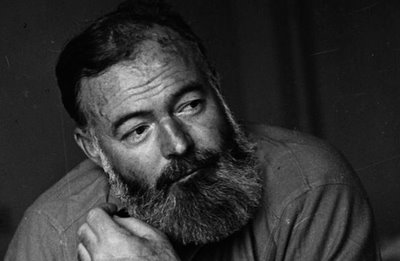
Some foolish writers take a bet with Ernest Hemingway for $10 each, (the equivalent of which today would be almost $500) that he cannot write an entire story in just six words. Hemingway, being Hemingway, immediately jots three tiny sentences onto this napkin, passes it around to his astonished associates and collects the entire winnings pot.

The famous six word story:

For Sale. Baby shoes. Never worn.

What is it about these three sentences that makes the reader entirely satisfied that it is complete? It has a beginning, middle and end; involves a range of emotions; implies desperation, lost hope, unimaginable sadness and loss, all in six short words. It is stories like this that leaves me unconvinced that flash fiction is just a gateway to ‘better’ writing. There is an air of mystery about flash fiction that can sometimes get lost within longer stories. When you only have 10 words, or one line in order to tell a tale, there cannot be any room for filler.

One of the best flash fiction sites I’ve come across was completely by chance while messing around on the Internet years ago. The website OneSentence.org says it best itself:

Most of the best stories that we tell from our lives have one really, really good part that make the rest of the boring story worth it.

This is about that one line.’

It offers true stories written by the public in just one sentence. One of the only conditions is that no fiction is allowed; all stories must be true. It is this concept, that as you are scrolling down the page, you are reading little postcard sized windows into people’s souls that makes the site so interesting and at times, so chilling. The only context given are the use of tags, the most popular include: childhood, love and humour, but also shame, break up, religion.

Some of my favourites:

Beth

Instead of him they sent back a folded flag, and when I was alone I tore it to pieces.

Jess

His efforts were so valiant; I didn’t have the heart to tell him it was front clasp.

Kris

I married my husband on our first date, but it has taken me more than 5 years to decide what colour to paint our dining room.

Queen Random

I stayed with her every minute while she was unconscious, but the very second she came to all she wanted to know was if the bastard who put her in the CCU was coming to visit her.

Ironic, huh?

My therapist thinks I should become a therapist.

When English teachers go bad

I used to demand a new world order in flawless iambic pentameter, but now I’d settle for one in sixteen-syllable haiku.

One in many

The poor janitor was only trying to do his job, and it was never supposed to include being threatened to be ripped limb from limb by grieving teenagers.

Gladys

It’s going to be hard telling my ex-mother-in-law that she is now going to be my sister-in-law.

Seriously

My grandmother called me the other day asking if I wanted any weed, because the man across the hall is selling it and she thought it was an excellent deal.

becks

My mom thought I was pregnant when I sat down to talk with her, then gave a sigh of relief when I told her I’m gay.

There are plenty of different types of flash fiction, and plenty of ways to interpret them. One thing is clear though, as a reader and a writer, they are addictive. Flash fiction opens up a whole new level of writing, and it is surprising how much you can get out of just a few words. It’s clear from sites like OneSentence.org that this type of writing is not just a way to psyche yourself up into writing something ‘proper’, and that these little sentences can have a bigger impact on a reader than whole novels. In fact, this whole piece of writing can be re written in just one sentence: ‘One day, like Hemingway, one line might pay for your bar tab.’

Bex Passmore